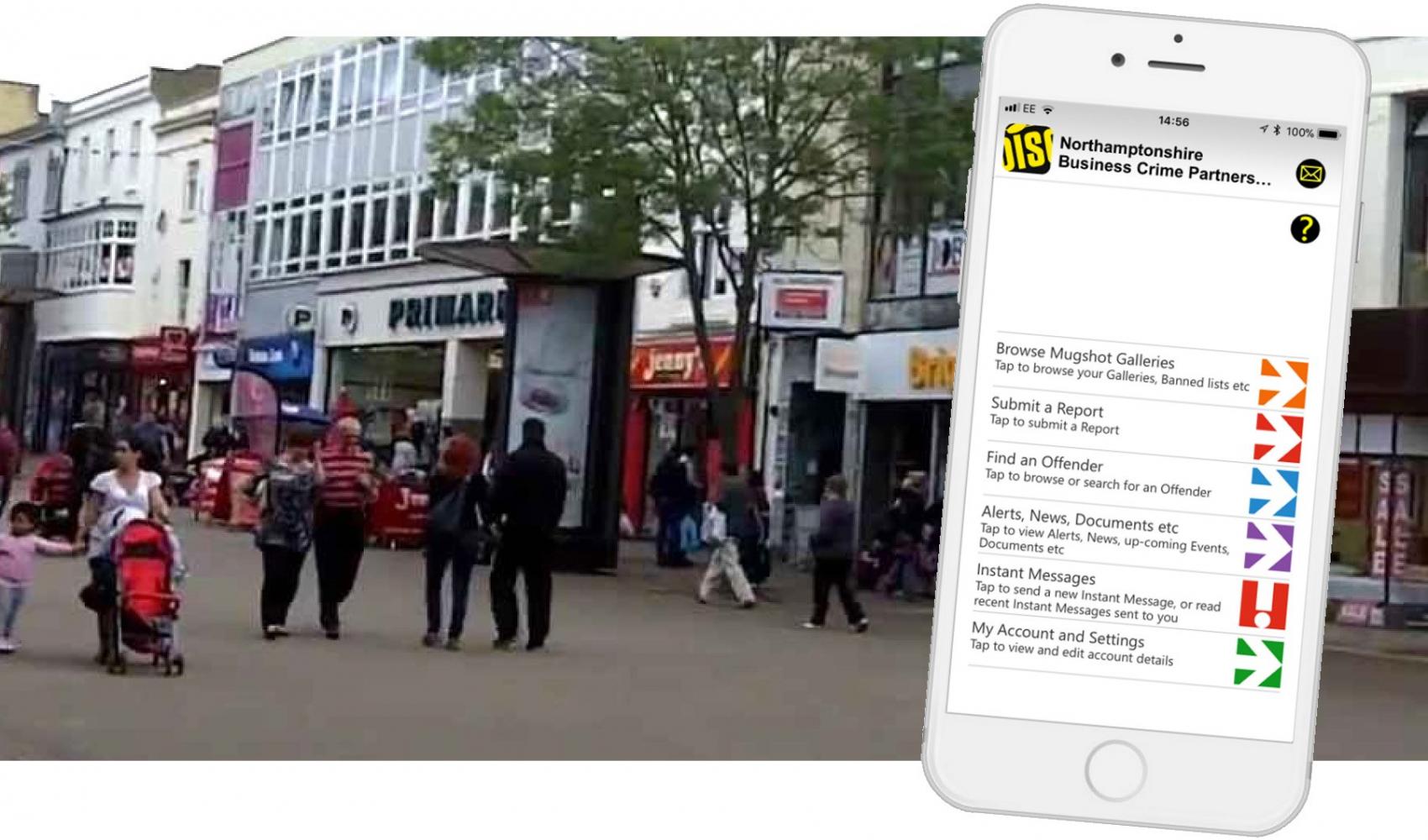
Welcome to 16 new Disc implementations – from iconic retail centres to new Disc Coronavirus system….
We’re delighted to welcome no less than 16 new Disc systems: seven implementations to support some of the best-known shopping malls in the country, eight for BIDs and local Watch groups – and the first of special Disc variant to help tackle Coronavirus-related anti-social behaviour.
One of the UK’s leading facilities management and security companies has invested in seven more Disc systems for one of its most prestigious retail customers. February saw the company go live with the new systems, now in place in some of the largest shopping centres in the UK including Birmingham, Leeds, Leicester and others.
Disc has been running in one of the retailer’s London sites for almost three years. “Obviously we’re delighted that the company has decided to implement Disc across its major sites in England and Wales” says Disc’s Charlie Newman. “We have developed a number of new functions for the project, including the ability for each implementation to copy incidents direct into any local BCRP or BID which is currently using Disc to manage a local exclusion scheme.”
Another prestigious new account is Warwickshire Retail Crime Initiative, which is to convert from its existing information-sharing system to Disc. Using the new ‘segregated content’ version of Disc, WRCI will be transitioning incrementally from its current system to Disc, eventually to support all its many daytime and night-time schemes across the county. WRCI was one of the first county-wide Business Crime Reduction Partnerships to be set up and we’re delighted to welcome them into the Disc network.
We also welcome Southampton BID as a new Disc user, making 12 Disc systems now implemented across Hampshire. Most are already linked together – with mutual consent of their Data Controllers – for the purpose of identifying and sharing information about travelling and prolific offenders. Southampton BID is also a member of the National Business Crime Solution so it can share relevant current awareness from NBCS (also a Disc user) with its local levy-payers with just one click.
Welcome also, to Great Yarmouth BID. The BID has adopted Disc to support its retail levy-payers and becomes the fifth Disc implementation in Norfolk. Like Southampton BID, Great Yarmouth has also joined the National Business Crime Solution and will be using Disc to share current awareness from NBCS quickly and easily with its levy payers.
Clacton becomes the 13th Disc implementation – and the ninth Disc-enabled pubwatch – in Essex. Says Disc’s Charlie Newman: “Essex is in a great position now to link all the pubwatches across the county with police and council licensing departments. That means not only that travelling offenders can be identified by police but the police – and council departments such as licensing and Trading Standards – can use the network to efficiently and effectively share useful current awareness information with licensees right across the county”.
West Mercia Police has implemented a fourth Disc system for its Telford district – this to support a new shopwatch scheme in Oakengates. Now with Disc systems covering both the daytime and the night-time communities in Telford, and Wellington retailers, the police may choose to link them together to provide West Mercia with a truly ‘joined-up’ approach to neighbourhood policing in the area.
Oswestry BID, also in, West Mercia, has implemented its second Disc system to run alongside its existing pubwatch scheme. The new system will be supporting the new retail scheme that the BID is in the process of setting up. Both systems are linked together so that administrating both is almost as easy for BID staff as administrating just one.
The new Disc systems in Oakengates and Oswestry bring the total number of Disc systems in the West Mercia police force area to 12.
Disc has long been, by far, the most widely used information sharing systems for Watchgroups and BIDs throughout the UK. But now it is increasingly being deployed to address anti-social behaviour and other community safety issues.
Chester Against Business Crime is working with Chester BID to deliver a Disc-based information sharing system to address local ASB – to the benefit of all BID levy-payers as well as, hopefully, the wider community.
Meanwhile, Guildford Borough Council’s Enforcement Team is deploying a new Disc system to help reduce ASB in the Ash area of the borough Ash Safety Partnership. It’s only the latest public agency to adopt Disc to help its Community Safety Partnership action teams.
Finally, the new Disc Coronavirus ASB system has been implemented by a major city council. It is the first to adopt the new Disc ‘variant’ which has been designed to enable police and community safety teams to deliver a flexible approach to enforcing government restrictions on social behaviours. “We worked hard and fast on developing the new system, and to deploy it in double-quick time for our customer,” says Charlie Newman.
“I believe Disc has a great deal to offer in the current situation – and delivers both the ‘soft touch’ and the consistent approach that police forces throughout the country have been urged to adopt”.
Latest
Segregated Schemes, Shared Goals: Running Multiple BCRP Networks with One System
Exclusion Schemes and compliance with data protection law
Organisations that run exclusion schemes and use Disc for processing personal data must comply with Data Protection law, including the General Data Protection Regulation (GDPR) and the Data Protection Act 2018 (DPA’18). It can be a daunting and confusing area of regulation, but vital to the lawful processing of data and so must be fully understood, and followed.
Here, we de-mystify the GDPR and DPA’18 requirements to help organisations running banning schemes like shopwatches, for example, to understand and meet their obligations.
Who is the Data Controller?
If an organisation processes information that can be used to identify a living person (‘personal data’) for business purposes, then it is a Data Controller and is responsible for complying with the law (see GDPR Articles 24-26, 30-36).
The Data Controller is the organisation or individual that decides the purposes (the ‘why?’) and the means (the ‘how’) of that processing. It must be registered on the UK Information Commissioner’s Office’s (ICO) ‘Register of Fee Payers’ which can be accessed here. For smaller organisations it costs £40 a year or £35 by Direct Debit.
As a Data Controller, the organisation is responsible for ensuring that it abides by the ‘Data Processing Principles’ (GDPR Article 5) which are listed here. These are general principles, but the law obliges Data Controllers to carry out specific tasks which, taken together, go a long way to ensure the organisation’s compliance with them.
About the Lawful Basis for Processing, Data Subject Access Requests and Data Breaches
The purpose of the GDPR is to provide rights to every living person (‘Data Subject’) wherever GDPR applies (GDPR Articles 12 -23) and to do so, it imposes specific obligations on Data Controllers.
1) Lawful basis for processing
Data Controllers can process personal data only once they have identified (and documented) a ‘lawful basis’ for doing so (GDPR Articles 6 and 9).
There are six types of “lawful basis” for processing, including ‘consent’. However, while consent is the best-known lawful basis, Data Controllers who need to process personal data necessarily without Data Subjects’ consent, may do so under the lawful basis of ‘legitimate interest’ (see ‘Legitimate Interest Assessment’ below).
2) Data Subject Access Requests
Irrespective of which lawful basis is chosen, Data Subjects can require Data Controllers to provide access to (or copies of) all the personal data they hold about them through a ‘Data Subject Access Request’. Controllers must respond to such a request within 30 days (although they may take longer to get the data to them if, for example, the Subject needs to prove who they are). Organisations can’t charge a fee for providing this information. And if Subjects can show that any of the data held is incorrect, they have the right to demand that it is put right.
In most cases, Data Subjects have other rights too – for example, they can oblige a Data Controller to delete all their personal data and to stop collecting it in the future. They can also require the Controller to transfer their data to another organisation. However, as we shall see below, these rights depend on which lawful basis the Controller has chosen for its processing (see Legitimate Interest Assessment below).
3) Data Breach notifications
A data breach is an ‘accidental or unlawful destruction, loss, alteration, unauthorised disclosure of, or access to, personal data’. Where a breach represents a ‘material threat’ to the Data Subject’s rights and freedoms, the Controller must notify the ICO and any Data Subjects affected, within 72 hours. It is down to the Controller to decide if a specific breach actually represents a ‘material threat’ to a Subject’s rights and freedom. To ascertain this Controllers can use the ICO’s online assessment tool here.
What Obligatory Documentation Do You Need To Provide?
Data protection law requires Data Controllers to produce, and abide by, specific items of documentation.
1) Record of Processing Activity
Data protection law (GDPR Articles 5 and 24) requires that Data Controllers document the way they and their organisation process personal data. This includes their internal procedures relating to processing personal data, a comprehensive description of precisely what kind of personal data they process, how it is processed and why, and their choice of lawful basis for processing Data Subjects’ personal data.
This document, often called the Record of Processing Activity must also describe the ‘technical’ (think ‘digital’) and ‘organisational’ (think ‘manual, physical’) security provisions for which the Data Controller is responsible. And if it can be shown that there is a legitimate reason to process Subjects’ ‘special category’ data (such as ethnicity) or prior criminal convictions or offences, Controllers must quote the ‘derogations’ in DPA’18 which enable this (Schedule 1 Part 2 (10) and Part 3 (36)).
The Record of Processing Activity does not need to be made public – but if the ICO receives a complaint from a Data Subject (see Privacy Information below), they will ask to see this document to assess internal processes for themselves. More detailed guidance on what a Recored of Processing Activity should look like can be readon the ICO’s webiste here.
2) Privacy Information
Irrespective of the lawful basis used to justify processing personal data Controllers must inform Data Subjects about every aspect of that processing (GDPR Articles 12 -14): what kind of data is being processed, for what purposes, with whom it may be shared, for how long it may be retained – in short, absolutely everything. This is to ensure compliance with the Controller’s obligation to operate in a transparent way regarding Subjects. This information must also include contact details if Subjects wish to submit a Data Subject Access Request.
Privacy Information must be communicated in ways which are most accessible and convenient to the Data Subject. If it can be provided to Subjects where and when their personal data is recorded, a hard-copy ‘Privacy Notice’ can be given to them. Where that’s not possible, or where it has been taken from them without their knowledge, organisations must ensure that full privacy information is made as available as possible – for example, displayed on a public website or on a notice board or poster where Subjects can see and read it.
If Data Subjects can show that full privacy information has not been provided to them, or if it’s not as available as reasonably possible, they can complain to the ICO. In this case, organisations run the risk of being fined by the ICO and even, in some cases, separately taken to court by the Subject.
3) Legitimate Interest Assessment
As a Data Controller, you must specify the lawful basis on which you are processing Data Subjects’ personal data (GDPR Article 5(2)). If it’s believed that the Subjects whose data you wish to process would not consent to your processing their data, but you believe you have a justifiable reason for doing so, then ‘Legitimate Interest’ can be chosen as your lawful basis (GDPR Articles 12/14). If so, a ‘Legitimate Interest Assessment’ must be completed.
There are three elements to a Legitimate Interest Assessment:
Legitimate Interest Statement – This asserts your organisation’s justification for processing Subjects’ personal data necessarily without their consent. For example, the Data Controller might assert its right to protect its members’ property and the safety and security of their staff and customers from the impact of crime and anti-social behaviour. If members offer a service to the public, it might additionally be asserted that they have a right to ‘withdraw the implicit licence to enter’ their premises – in other words, to ban Subjects from their property.
Data Protection Impact Assessment – The second element of the document demonstrates that your organisation has considered the impact on the rights and freedoms of the various types of Data Subjects whose personal data it proposes to process. For example, adults, non-adults (see our separate Factsheet on Young People and Watch Groups), vulnerable people etc. For each type of Data Subject, every possible impact should be identified and, for each, the risk that it represents to the Subjects’ rights and freedoms. This assessment should include the likelihood, as well as the severity, of each impact, and what measures are in place to mitigate them (GDPR Article 35).
Balance of Interests Assessment – The last element must show that Controllers have balanced the interests of their organisations (as defined in the Legitimate Interest Statement) against the rights of Data Subjects (as defined in your Data Protection Impact Assessment) and have concluded that the organisation’s rights outweigh those of the Subjects in relation to the specific purposes and uses of the data processing it is proposing.
Together, these three elements constitute the Legitimate Interest Assessment. It’s not a public document – but if the ICO investigates data processing following a complaint made to it by a Data Subject, Controllers must be able to show this document to justify the use of Legitimate Interest as the lawful basis for processing Subjects’ personal data necessarily without their consent.
4) Data Processor Contract
Data Controllers are held responsible for their employees’ compliance with data protection law (see Rules & Protocols below). But if Data Controllers use an outside organisation or individual to process personal data on their behalf, it is a legal obligation to have in place a formal ‘Data Processor Contract’ (DPC) with them (GDPR Article 28).
Sometimes, for example, if you want to use Google or Dropbox or a global Cloud service provider to process your data (and just storing data is ‘processing’) you’ll have to agree to their Terms & Conditions which, if you look hard enough, include a Data Processor Contract.
According to GDPR, Data Processor Contracts must include eight obligatory clauses – read about them here – plus any others that the Controller may want to include.
What Rules & Protocols Do Controllers Need To Be Aware Of?
‘Rules & Protocols’ are not obligatory under, or referred to in, Data Protection law. However, they define the obligations that Data Controllers place on those individuals who may access and use the information for which they are responsible – and are essential.
The purpose of Rules & Protocols is to make it clear to any individuals that act outside the rules, that they do so without the consent of the Data Controller. In effect, they are acting as Data Controllers in their own right, deciding the purposes and means of processing the data and, as such, they are responsible for their own actions.
Where an employee or member of your organisation breaks the rules, it isn’t enough simply to assert (in court perhaps?) that he or she knew what the rules were, and intentionally broke them. Organisations may still be held ‘vicariously responsible’ (and liable to prosecution and fines, etc.).
To avoid this, Data Controllers must ensure that all individuals who have access to your data not only certify that they have read, understood and agreed to abide by your Rules & Protocols but, for example, are regularly reminded of their obligations. You should also be able to show that sufficient technical (think digital) and organisational (think physical, manual) security measures are in place to make it as hard as possible for your employees or members to break your rules.
Disc Support for Compliance with Data Protection law
We provide Disc to customers who are Data Controllers in their own right. We are therefore Data Processors on their behalf, in accordance with our own Data Processor Contract. Customers are also welcome to offer us their own DPC if they prefer.
While our customers are responsible for their compliance with the law, we provide consultancy to assist them in this. Among our services, we provide on-demand webinars on compliance, as well as a full set of ‘Model Documents’ including Record of Processing Activity, Privacy Notices (for Offenders and Members), Legitimate Interest Assessment (including all three necessary elements) and sample Rules & Protocols.
The Disc system itself aligns with the critical concept of ‘data protection by design and default’ as defined by GDPR. Features include (configurable) automated irrevocable personal data deletion periods, obligatory member-certification to (configurable) Rules & Protocols and other ‘must-read documents’ including Privacy Notices, automated periodic ‘forced’ re-certification by members, availability of Privacy Notices on public-facing elements of Disc for offenders, fully documented ‘technical’ security provisions to the highest level of online security certified to ISO27001:2013 standards, built-in GDPR-compliant Instant Messaging system and other vital features.
For more on how business crime reduction schemes can comply with data protection law, watch our free video webinar here. At the end of the webinar we’ll send you a Guide (PDF format) covering the same subject matter as this blog from which you can download invaluable ‘model documents’ to help you ensure compliance of your own scheme.
Latest
Segregated Schemes, Shared Goals: Running Multiple BCRP Networks with One System
How should Watch Groups deal with young offenders?
Watch Groups like shopwatch schemes or banning schemes, for example, will of course inevitably come into contact with young people and in most cases there is no issue – as long as they comply with the law!
Common law…
Common law entitles any owner or manager of private premises open to the public to ‘withdraw the implicit licence to enter’ the premises from anyone, for any reason. The reason, however, must not have anything to do with ethnicity, gender, marital status, sexual orientation, disability, religious beliefs – or age.
So far so good: a Watch Group can ban a young person from its members’ premises because he or she has been reported for a qualifying incident – as long as it’s not because of their age, or any other of these ‘protected characteristics’.
…and Data Protection law
If a Watch Group needs to process the personal data of young people (which it almost certainly will need to do at some point) it must comply with data protection law, namely GDPR and, in the UK, the Data Protection Act 2018.
GDPR says that if any organisation wants to process the personal data of a young person – defined in the Data Protection Act as under 13 years of age – on the ‘lawful basis’ of consent then they must secure additional consent from someone in a parental or guardian role.
This, however, does not apply to Watch Groups, the vast majority of which do not rely on ‘consent’ as their lawful basis for processing but on ‘legitimate interest’.
Where organisations base their processing of personal data on legitimate interest, GDPR does not apply any specific age-related restrictions to that processing. Instead, it requires that the Data Controller conducts a ‘Legitimate Interest Assessment’ which includes a so-called Data Protection Impact Assessment (DPIA).
Defining the impact of Data Processing on young offenders
It is in the DPIA that the Data Controller must consider the impact on the rights and freedoms of the different types of Data Subjects whose data it processes.
Young people, it’s pretty obvious, are different from ‘adults’. They are likely to be more impressionable, more ‘easily led’, less aware of the consequences of their actions. Therefore, they must be included as a specific ‘type’ of Data Subject in the DPIA, and considered separately.
By the way, it’s up to the Data Controller to decide what “young people” actually means: over 13? Over 16? The decision is entirely the Data Controller’s.
The DPIA must identify any threat to the rights and freedoms of each type of Data Subject, and if there is any risk, it must show how the Data Controller mitigates that risk. In the case of young people, the Controller might require that, where a young person is reported for a qualifying incident, their data will not be shared with members of the Watch Group (as would be the case for ‘adults’). Instead, the data may simply be retained in their local Disc database and shared only with appropriate people (e.g. parents, school or public agencies such as police or an early intervention team).
Additionally, for example, in the DPIA the Controller might stipulate that the young person is treated as any other offender (i.e. as an ‘adult’) if they are reported for a further or subsequent qualifying incident.
As always, it’s down to the Data Controllers to make up their own minds on this, but whatever the decision, Disc enables the smooth and consistent application of the rules for the Watch Group and exclusion scheme.
For more on how business crime reduction schemes can comply with data protection law, watch our free video webinar here. At the end of the webinar we’ll send you a Guide (PDF format) covering the same subject matter as this blog from which you can download invaluable ‘model documents’ to help you ensure compliance of your own scheme.
Latest
Segregated Schemes, Shared Goals: Running Multiple BCRP Networks with One System
Eleven new Disc Implementations in first two months 2020
Self-management of low-level crime and anti-social behaviour in our towns and city-centres is evolving – and with it, the Disc customer-base. In the last two months, we’ve been delighted to welcome no less than 11 new Disc implementations in the last six weeks alone.
While self-management is growing, so too is the use of Disc by police forces around the country. Police have long participated as members of the Disc systems which support in excess of 500 independent Watch Groups and Business Improvement Districts throughout the UK. And now they’re investing in their own Disc systems to enhance the level of support they provide to local business crime reduction schemes.
So, welcome to the Disc system:
Cardiff BID Community
Cardiff BID has long used Disc to support its retail levy-payers. Now it has implemented a second system to extend its crime and ASB reduction scheme to non-retailers among its levy payers. That increases to six the number of Disc systems currently serving business communities throughout the South Wales police force area.
Hampshire Hotel Watch
Hampshire’s Police and Crime Commissioner has funded a Disc system to power a new Watch Group engaging with all hotels across the Hampshire Policing area. Hotels and other leisure sector businesses face their own kinds of low-level crime and ASB issues, which will be the focus of the system.
MaidSafe
One Maidstone BID has purchased Disc to support the work of Maidsafe Business Crime Reduction Partnership in Kent. MaidSafe has been in operation since 1996 and will be using Disc to take advantage of current practice and forge ahead in reducing crime.
Sutton BID
Sutton BID in south-west London has bought a second Disc system to support the further development of its crime reduction scheme for its levy-payers. The system is being administrated on behalf of the BID by the South West Business Crime Centre.
Basildon Pubwatch
The decision by Basildon Pubwatch to adopt Disc means there are now no less than seven Disc systems serving night-time economies across the county. Linked together these provide the potential for Essex Police and licencing authorities to access a wealth of low-level crime and ASB intelligence previously unavailable to them.
Hull BID
We are delighted to welcome Hull BID to our community – our first implementation in the Humberside Police force area. The BID was up-and-running with its Disc system in less than a month after we set up their new Disc ‘workspace’. And, separately, we’re looking forward to implementing our second Disc system in Humberside shortly…
Milton Keynes Partners Against Crime
Milton Keynes Business Crime Reduction scheme – Partners Against Crime – is the latest Disc system in the Thames Valley police force area where 14 Disc systems are in place across Berkshire, Buckinghamshire and Oxfordshire. These implementations provide exciting opportunities for police to share local current awareness and information on prolific offenders.
Colchester Business Against Crime (ColBAC) and Braintree Against Retail & Business Crime (BARC)
Essex-based Colchester Business Against Crime (ColBAC) and Braintree Against Retail & Business Crime (BARC) have each independently signed up with Disc. ColBAC’s Disc system has been funded by Colchester BID which has already funded Disc for its night-time economy. BARC is an independent business crime reduction partnership founded in 2005, funded by member subscriptions. That makes a total of 11 Disc systems throughout the Essex policing area – four serving retail centres, seven serving the county’s pubwatches.
West Mercia Police – Wellington, Shropshire
West Mercia police have invested in their third Disc system. This implementation will serve the night-time economy in and around Wellington, bringing the total number of Disc systems serving the West Mercia police area to 10.
Aylesbury Pubwatch
Aylesbury Business Against Crime has been using Disc to manage its retail scheme for the last four years. Now the ABAC is extending its services across the town’s night-time economy.
Poole BID
We’re delighted to welcome Dorset-based Poole BID as our latest Disc user in Dorset; the system will support levy-payers in its daytime economy.
Latest
Segregated Schemes, Shared Goals: Running Multiple BCRP Networks with One System
The effect of the policing gap grows ever more prevalent in our industry. The demand for help in managing low level crime on the high street and in local communities is growing by the week and we are seeing this at Disc with more and more new implementations coming on board. We are thrilled that shopwatch, pubwatch and other crime reduction schemes are choosing to use Disc as their reporting tool of choice and even more thrilled that major retailers are also starting to see the benefits of Disc in practice.
Welcome, to our latest customers!
Major shopping centre owner/operator chooses Disc
One of the UK’s largest owner/operator of shopping centres – including some of the UK’s most iconic – has adopted Disc for its internal incident reporting and offender management system. They were impressed with Disc’s functionality and user-friendliness – but also with Disc’s policy of ‘data protection by design and default’, ensuring users’ robust alignment with all-important Data Protection obligations. “Obviously we’re delighted,” says Charlie Newman, CEO of Littoralis, the company behind Disc, “and looking forward to seeing Disc supporting some of the best-known shopping centres and malls throughout the UK”.
High-end luxury retailer adopts Disc worldwide
One of the best-known luxury goods retailers in the world has chosen Disc to share current awareness and offender details throughout its international network of stores. The Disc App provides accessibility for security personnel into the company’s central control room, which works 24/7 supporting its stores across the world. “The customer maintains exceptionally high levels of internal and external security so the Disc ‘secure environment’ is a natural fit” says Charlie Newman. “As a specialist retailer, it’s also subject to threat from fraudsters who target super-high-end retailers like them. Sharing current awareness through Disc as well as identities of known offenders is key for them”.
Oswestry BID becomes ninth Disc system in West Mercia
Oswestry BID has adopted Disc to support its levy-payers. Oswestry is to use Disc to support the BID’s night-time economy. Once that is up and running it will look at extending Disc to cover daytime levy-payers too.
Letchworth BID – from confirmation to going live in just two weeks!
How long does it take to go live after choosing to implement Disc? For Letchworth Garden City BID (confirmed they wished to ahead with Disc on October 14th and went live on the 25th) it was less than two weeks! “Potential customers often ask us how long it will take to get Disc up and running” says Dave Jackson, Disc Customer Support Manager, “but really it entirely depends on the customer. I think Cribbs Causeway Shopping Centre outside Bristol was up-and-running within the same kind of period, and some may have been even quicker. But Letchworth shows just how quickly a BID can go live too. Of course the speed of implementation depends on many factors not least of which is how much time the Administrator can devote to configuring their Disc system and adding content; with our self-paced training manuals, new Administrators can take as much – or as little – time as they need. It’s great to have Letchworth Garden City on board so quickly!”
Reading Business Against Crime – the twelfth Disc system in Thames Valley
Reading BID has been using Disc to support Reading’s licensees and night-time economy since 2017. Now it has enabled Reading Business Against Crime to acquire its own Disc system to support its retailers and day-time economy. Reading Business Against Crime becomes the 12th Disc system in the Thames Valley police area.
Soho Road BID – the fifth Disc system, in West Midlands
Soho Road BID has adopted Disc, becoming the fifth Disc system in the West Midlands police area. The BID covers over two miles of Soho Road in Birmingham’s Handsworth area and contains some of the lowest-income communities in the UK. With only one major multiple in the BID area (Lidl), the vast majority of levy payers are small independent retailers that make up this strongly ethnic area. “It’s a great opportunity to demonstrate how Disc can fill ‘the policing gap’ in an area which suffers more than most from displacement of offenders from other areas of the city” says Disc CEO Charlie Newman. “We’re really excited to see Disc bring the kind of benefits to Soho Road that it has delivered in more conventional town- and city-centre BIDs. Many other areas like Soho Road can benefit from the way Disc reduces low-level crime and anti-social behaviour in these vulnerable communities, and this is a great opportunity to prove it”.
Uxbridge BID – the 30th Disc system in the London/Met police area.
We’re delighted that Uxbridge BID has decided to implement Disc. It becomes the 30th Disc system implemented in the London/Met police area and will be able to share data – including current awareness by Instant Messaging and emailed Alerts, plus information to identify prolific and travelling offenders – with Disc systems in adjoining areas on a peer-to-peer basis.
Ipswich Pubwatch
Ipswich Central has been a Disc user since 2015, at first simply to link together its street wardens but more recently to share information across its retail levy-payers. Now it has invested in a second Disc system to support Ipswich Pubwatch. Ipswich BID now has two entirely separate schemes – with different members and offenders – but both systems can be administrated through the same Disc Admin centre, making it almost as easy to manage both schemes as if it is just one.
Latest
Segregated Schemes, Shared Goals: Running Multiple BCRP Networks with One System
Bring smaller pubwatches under single Disc ‘Umbrella’ for Data Protection compliance
Pubwatch schemes – even the smallest – must comply with data protection law, including the GDPR that came into effect in May 2018.
The law gives data subjects such as offenders more rights and the ICO more powers to investigate and impose hugely increased fines. It also drives a strong incentive for no-win no-fee solicitors to pursue additional damages on behalf of their clients.
It’s a recipe for one of three outcomes:
1) more non-compliant (and therefore illegal) pubwatch schemes.
2) more closures of pubwatch programs which can’t afford the time and money required to ensure compliance.
3) or bringing more pubwatch schemes into larger ‘umbrella’ groups where compliance is carefully managed and maintained while each pubwatch continues to make its own decisions and retain its independence.
Combining Pubwatch Schemes On Disc To Drive Down More Low Level Crime
It’s a direction that more and more pubwatches are taking: neighbouring pubwatch schemes across, for example, a specific district or metropolitan area continue to operate independently, making their own minds up about exclusions, banning etc, but within an ‘umbrella’ organisation which looks after regulatory issues and compliance.
Our Disc online crime reporting system is increasingly being used to provide that umbrella. In urban areas and conurbations single Disc systems are being used to support multiple local pubwatches across the Boroughs of Harrow or Wandsworth in London, or in larger towns such as Bath. But it’s in less urban areas, where smaller pubwatch schemes support clusters of premises in more rural areas, where the trend is most noticeable.
Newbury, Gloucester, Taunton, Yeovil, Hereford, Huntingdon and Workington are just some of the towns which have extended their existing Disc systems to cover smaller, rural pubwatches in outlying areas. Local authorities such as Rhonda Cynon Taff in South Wales, or across the entire county (and police forces area) of Staffordshire, use individual Disc systems to support multiple pubwatch schemes.
Linking them together within a single Disc system brings other essential benefits to participating pubwatches too. The timely and easy distribution of ‘alerts’ through the system can help licensees protect themselves against counterfeit currency, travelling scammers, stolen goods or fake alcohol sellers. Being aware of individuals banned in one pubwatch helps members of neighbouring pubwatches keep an eye on new faces who may be a source of trouble.
Pubwatch Schemes Which Are Fully Compliant
By combining multiple pubwatch schemes in this way, each benefits from the rock-solid compliance made possible by the unique Disc system – yet each controls its own banning decisions, exclusion schemes and membership, and has online access to their own Mugshot Galleries in the Disc ‘Desktop’ or smartphone App.
Pubwatches and their members can be fiercely independent and no one size of ‘umbrella’ will fit all circumstances. The benefit of Disc is that it’s configurable to match virtually any group, whether it’s multiple pubwatches that have decided to come together to create such a group, or a Business Improvement District that decides to extend its support to pubwatch programmes beyond its own immediate levy-payer area.
Contact us to discuss how to best use Disc across multiple pubwatch locations.
Latest
Segregated Schemes, Shared Goals: Running Multiple BCRP Networks with One System
Research proves positive impact of local Exclusion Schemes
Over the last four years, Dr Andrew Stafford and his team at the University of Gloucestershire have been studying the performance of Gloucester’s city-centre crime reduction scheme. In particular, it has asked two key questions: does the scheme help reduce low-level crime and, if so, how much?
The answers, based on objective and scientifically gathered statistical evidence gathered over the four-year period, are clear and unambiguous: the crime reduction scheme has made a substantial impact on reducing low-level crime at a time when policing levels have reduced substantially and continues to do so.
Gloucester City Safe‘s membership comprises most of the city centre’s retailers. Through the crime reduction scheme, they identify ‘offenders’ reported for activity that threatens their property and/or the safety of their staff and customers. Once identified, the offenders are given a formal warning – a ‘Yellow Card’: if they are reported again within a given period, they will receive a ‘Red Card’ which means they’re banned or ‘excluded’ from the premises of all the members of the scheme for a further period. ‘Two Card’ schemes like these operate in towns and city-centres throughout the UK.
Stafford’s research shows that almost four out of every five first-time offenders do not go on to re-offend. Of those that do, one-in-three do not re-offend again. The research also shows that offenders that re-offend chose not to do so in the premises in which they were originally reported.
Schemes like Gloucester City Safe are filling a critically important part of the ‘Policing Gap’ that has been created by the withdrawal of on-the-ground policing in towns and city centres throughout the country. Indeed, more and more police forces are actively supporting the creation of schemes like these. They see them not only as a way of reducing low level crime but also of encouraging early-stage offenders to address their behaviours before they climb any further on what can often be an escalator into more serious crime. And at the other ‘end’ of the gap, schemes like these help police identify prolific, sometimes professional offenders, so that they can concentrate their resources more effectively on bringing the to justice.
Two new police implementations will drive down local low-level crime and ASB
In addition to the seven new local Disc systems announced this month (see ‘Magnificent Seven’ news item) two others show how Disc can be deployed by Police in new, innovative ways.
Disc is used in over 450 towns and city-centres across the UK to support retailers and local businesses to self-manage low level crime and anti-social behaviour in their local communities. But Disc is a highly versatile platform that can be configured to support policing too.
This month saw Sussex Police adopt two new Disc implementations, each for very different purposes:
To support the local Disc systems in the force area, with seamless, secure sharing of offender information, fast and effective sharing of current awareness right across the county, and consolidating locally gathered intel about low-level offenders to help identify prolific offenders and help police deploy scarce resources for maximum effectiveness.
To support the police’s county-wide crime reduction scheme supporting organisations in remote or rural retail areas and enable them to drive down crime and ASB and ‘target harden’ against rural crime.
Sussex Police Disc
Sussex Police has acquired its own Disc system to support the work of the 11 existing local Disc systems currently supporting town- and city-centre crime reduction schemes across the county.
This is the first ‘Police Disc’ implementation to go live and will enable police to share current awareness information with each local Disc implementation, share offender information through the Disc ‘Secure Environment’ in compliance with Management of Police Information (MOPI) and gather intelligence about offenders in order to identify prolifics or semi-professionals who can too often slip below the police ‘radar’.
This is an important step forward. It provides police with access to a ‘consolidated data-view’ of all low-level offender data collected and curated by the local partnerships as independent Data Controllers. Other benefits include online, paperless management of Information Sharing Agreements.
Sussex Countrywatch
Sussex Police have also implemented Disc to support its county-wide rural crime reduction programme. Addressing rural crime is a key priority of Sussex Police & Crime Commissioner Katy Bourne and Disc is now an important part of that strategy.
It’s not the first time that Disc has been deployed to address rural crime and anti-social behaviour but this is the first time that a police force has adopted the system to fight rural crime county-wide. The system will link with Sussex Police’s new main Disc system for cross-Disc sharing of information and current-awareness.
Latest
Segregated Schemes, Shared Goals: Running Multiple BCRP Networks with One System
Two-Step Authentication delivers enhanced data protection
More and more online service providers offer customers the option of setting up ‘Two Step Authentication’. Now Disc users can choose to adopt ‘2SA’ too.
Two-Step Authentication provides extra security online. With 2SA, users can protect their accounts by requiring anyone trying to access them to submit not just the usual email-and-password ‘credentials’ but an additional element which can only be known to the authorised user. So even if someone knows the user’s login credentials, they won’t be able to gain access to the user’s account.
This is especially useful for Administrators or Authors of Disc systems who need to access their local Disc Admin Centre through the Disc ‘Desktop’. To apply this extra layer of security, all they need to do is download an ‘Authenticator App’ onto their smartphone (there are many of them, all free of charge, from the likes of Microsoft, Google etc) and set up their account on the App.
From then on, each time the (legitimate) user logs into their Disc Desktop – to access the Admin Centre for example – a unique code is displayed in their Authenticator App. Only when the code is entered into a field displayed on the Disc Desktop can they get through.
Charlie Newman, CEO of Disc explains, “We’re really pleased to be able to announce this new security feature. We’re determined to provide the highest possible level of data security at every level within Disc. Larger corporate customers are looking for this kind of security and we’re delighted to provide it”.
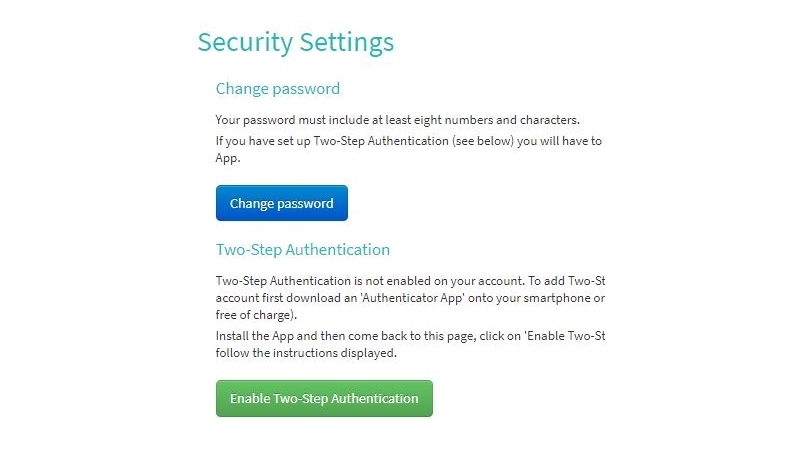
To switch on Two Step Authentication, in the navigation ribbon of the Disc Desktop go to ‘More –> My Account and Security Settings’. Scroll to the bottom of the page where you’ll see ‘Change Password’ and ‘Two-Step Authentication’ and follow the on-screen instructions…
Please contact us if you have any questions or need further support in setting up Two Step Authentication.
Latest
Segregated Schemes, Shared Goals: Running Multiple BCRP Networks with One System
The Magnificent Seven: new Disc systems launched in August
This month has seen seven more towns and city-centres implement the Disc online crime management service. “We’re seeing substantial growth in demand for self-management of low-level crime and anti-social behaviour in communities,” says Charlie Newman of Disc, “mainly driven by spikes in crime which affect local high streets, retailers and of course the public”
“With police funding for community policing – especially for business-related low-level crime and ASB – at an all-time low and a reduction of ‘feet on the street’ to deal with this type of crime, local business communities, BIDs and private-sector crime-reduction schemes are taking pro-active, positive steps to protect both their local business community and their public with Disc.”
Bedminster
Bedminster BID was driven to get in touch in response to a sudden spike in local ASB in its area. It contacted Disc last month and its Disc system was implemented the same day. The BID team is currently configuring its new system to meet their bespoke needs before going live and becoming the latest of nine Disc systems in the Avon & Somerset police force area.
Northallerton
Having been impressed by the Disc system in Skipton, North Yorkshire and finding that low-level crime and ASB are very much issues even in smaller towns in rural areas, Northallerton BID has decided to implement its own Disc system. “We’re especially pleased to welcome Northallerton” says Charlie Newman. “North Yorkshire is the most rural of all police forces in England and Wales and is set to benefit from Disc as much as large towns or urban areas”.
Newton Abbot
Newton Abbott Security Trust (NAST) is a great example of how a small scheme can use Disc to extend its coverage, making it more financially sustainable and effective. Tom Hirst, Town Centre Security Manager has chosen Disc to support NAST which looks after the local shopwatch and night-time economy as well as the CCTV system around the town, but the plan is to extend the system to cover neighbouring small towns including Kingsteinton, Bovey Tracey and others.
Tom explains, “We had growing concerns about compliance with our existing paper-based system, but mostly we were drawn to Disc because of its ease-of-use and the overall professionalism of the system”.
Littlehampton
The Traders Association in this seaside town has adopted Disc to support its retailers and the wider day-time economy. Together with two new county-wide Disc systems implemented in August by Sussex Police (see ‘Innovative Disc Implementations’ news item) the total number of Disc systems in Sussex is now 13.
Preston
The BID in Preston, managed on behalf of its levy-payers by North & Western Lancashire Chamber of Commerce, has acquired Disc to support its crime reduction programmes in the city. Preston becomes the fifth town in Lancashire to adopt Disc and we hope to see them linked together in future to support wider information sharing across the force area…
Bristol
This new Disc implementation will support the night-time economies across two adjoining BIDs – Bristol Broadmeads (a long-time Disc user for its daytime economy) and Bristol City Centre BID (which is new to Disc). This collaborative launch is a step forward in self-managing low-level crime at night-time ASB. Management of the new Disc system has been outsourced to the South West Business Crime Centre.
Northampton
Northampton BID will be using its new Disc system to share ASB-related current awareness and offender data across all the BID levy-payers, most of whom are not retailers. It will link closely with the long-established retailer-only Disc system run by Northampton Business Crime Partnership for sharing current awareness information. It’s the first Disc implementation which targets anti-social behaviour only and engages with all levy-payers in a BID – not just retailers and licensees.
Latest
Segregated Schemes, Shared Goals: Running Multiple BCRP Networks with One System