Bridging the Policing Gap: The Crucial Role of BCRPs in Reducing Retail Crime

Bridging the Policing Gap: The Crucial Role of BCRPs in Reducing Retail Crime

Retail crime and antisocial behaviour (ASB) continue to be major challenges for businesses across the UK. With police resources stretched thin due to budget constraints and rising demands, the ability to effectively tackle shoplifting, theft, and other retail-related offences has become increasingly difficult.

This gap in policing has led to the rise of vital Business Crime Reduction Partnerships (BCRPs)—collaborative initiatives that empower businesses to share intelligence, deter criminal activity, and create safer retail environments. It is vital to recognise the key role these partnerships play in reducing crime and filling the void left by limited policing resources.

The Growing Problem of Retail Crime

According to a recent British Retail Consortium (BRC) report, retail crime cost UK businesses over £1 billion in 2022, with incidents of violence and abuse against shop workers reaching record levels. Shoplifting alone has surged by 26% in some areas, with organised retail crime becoming more sophisticated and widespread. With police forces prioritising higher-level crimes, many retail offences go unreported or unaddressed, leaving businesses vulnerable.

A unique research project from the University of Gloucester highlighted the effectiveness of local banning schemes, showing that over 60% of offenders stopped offending in areas where these schemes were implemented (Source). These figures emphasise the urgent need for structured approaches like BCRPs to combat repeat offending.

How BCRPs Fill the Policing Gap

BCRPs serve as a vital bridge between businesses, local authorities, and police forces, ensuring a coordinated response to retail crime. These partnerships operate on a not-for-profit, subscription-based model and provide:

  • Real-Time Intelligence Sharing: Retailers and security teams share live updates on offenders, emerging crime trends, and incidents via secure platforms like Disc.
  • Direct Police Communication: BCRPs often equip local police officers with radios connected to business networks, allowing for quicker interventions and improved response times.
  • Banning Orders: Persistent offenders can be banned from all businesses within a BCRP zone, creating a strong deterrent and reducing reoffending rates.
  • CCTV Integration: Some BCRPs work directly with local authority CCTV control rooms, enabling live tracking of known offenders and enhanced crime prevention strategies.
  • Targeting Organised Crime: By collating data across businesses, BCRPs help identify patterns of organised shoplifting and fraud, allowing for strategic law enforcement action.

The Measurable Impact of BCRPs

Research published in 2019 underscores how private, low-level crime reduction schemes like BCRPs are increasingly filling the gaps left by shrinking police resources (Source). The study found that areas with active BCRPs reported:

  • A significant reduction in repeat offences due to targeted interventions.
  • Better offender identification and tracking, leading to swifter justice.
  • Increased confidence among retailers that action is being taken against crime.

Moreover, the National Association of Business Crime Partnerships (NABCP) affirms that BCRPs help to prevent crime in real-time, with initiatives such as “Banned from One, Banned from All” effectively excluding known offenders from multiple premises at once (Source).

Beyond Retail: BCRPs’ Wider Community Impact

While BCRPs are primarily designed to protect retailers, their work extends into broader community safety initiatives, including:

  • Safe Spaces & Support Schemes: Many BCRPs run schemes such as Ask for Angela, providing safer environments for vulnerable individuals.
  • Violence Reduction in Night-Time Economy: Coordinating with bars, clubs, and local authorities to address alcohol-related crime and disorder.
  • Youth Offender Prevention: Engaging with youth services to tackle first-time offending and prevent reoffending.

The Future of BCRPs: Why Businesses Must Get Involved

The success of BCRPs depends on strong business participation and continued collaboration with local authorities. As police forces face unprecedented resource challenges, businesses must take proactive steps to protect their staff, customers, and profits.

How Businesses Can Support BCRPs:

  1. Join Your Local BCRP – Many towns and cities already have active partnerships that retailers can subscribe to.
  2. Encourage Intelligence Sharing – Reporting incidents ensures a collective approach to tackling crime.
  3. Engage with Local Authorities – Strengthening links with police and councils can improve enforcement strategies.
  4. Utilise Crime Prevention Tools – Platforms like Disc provide retailers with real-time alerts and valuable crime data.

Business Crime Reduction Partnerships are more than just crime prevention initiatives—they are essential to maintaining the safety, security, and economic viability of UK high streets. With retail crime and ASB on the rise, the need for coordinated action has never been greater. It’s crucial for businesses, law enforcement, and local authorities to unite in closing the policing gap and creating safer city centres for all.

Want to learn how Disc can support crime prevention in your area? Get in touch today.

How Disc is Enhancing Crime Prevention in Manchester City Centre

How Disc is Enhancing Crime Prevention in Manchester City Centre

Manchester City Centre is a vibrant hub for retail, hospitality, and tourism. However, high footfall traffic brings increased challenges related to retail crime, antisocial behaviour, and public safety. To address these issues, CityCo Manchester Business Crime Reduction Partnership (BCRP) was set up and is core funded through a combined radio and BCRP Membership subscription and delivered by CityCo.  The partnership has integrated Disc into its crime prevention strategy since 2013, making it a core tool for information sharing and collaboration between businesses and law enforcement.

The Role of Disc

CityCo Manchester operates two Disc platforms to cater to different sectors: one for retail and commercial businesses and another for the night-time economy (NTE). In 2023, the NTE system was upgraded to a segregated content platform, allowing the partnership to support additional business sectors, ensuring compliance while enabling businesses to access relevant intelligence.

Sectors using Disc in Manchester City Centre:

-Retail & commercial businesses
-Licensed premises (pubs, bars, nightclubs)
-Hotels (Accommodation BID – 76 hotels) (service provision to the ABID funded by the Manchester Accommodation BID)
-Car parks and patrol staff
-Estate management teams

These platforms enable businesses to:

✔️ Securely report incidents and share intelligence with other members
✔️ Receive real-time alerts on criminal activity, wanted individuals, and high-risk incidents
✔️ Stay informed about new exclusions, Community Behaviour Orders (CBOs), injunctions, and other legal measures
✔️ Access push notifications through the Disc app for instant updates

How Disc Supports Greater Manchester Police (GMP)

The Greater Manchester Police (GMP) Neighbourhood Strategic Team has fully integrated Disc into their policing model. It provides officers with instant access to intelligence, helps them track live incidents, and improves overall crime management in Manchester City Centre.

Neighbourhood Strategic Sergeant, Manchester City Centre Neighbourhood Policing Team, highlights how Disc has transformed their approach:

DISC is a really useful tool that has enhanced Policing and community relations in Manchester City Centre. Not only is it a system that enables officers to access a depth of information via intelligence, nominal profiles or ID sorts, but it is also a great means of communication. The system allows officers to receive and send messages/alerts so that incidents can be tracked in ‘live time.’ Officers regularly use the system to seek information to assist in an investigation or locate a vulnerable or missing person. DISC has become an integral part of the way we Police Manchester City Centre and link to our community, whether that be retail, hospitality or public services. Our model is the envy of many other policing areas.”

Why Disc is Valuable to GMP’s City Centre Policing Team

🔹 Focused intelligence sharing – Police databases contain vast amounts of offender data, but Disc creates a targeted system where businesses report incidents relevant to their community, making it easier for police to identify repeat offenders and crime trends.
🔹 Identifying high-harm offenders – Through Disc, GMP can monitor retail crime patterns and pinpoint individuals causing the most harm to businesses.
🔹 Secure information dissemination – Officers can share intelligence on individuals with bail conditions, criminal behaviour orders (CBOs), injunctions, or specific Modus Operandi (MOs) (e.g., using de-taggers, carrying weapons) securely with relevant partners.
🔹 Fully compliant and legal – Disc provides a secure and GDPR-compliant platform for intelligence sharing, ensuring sensitive data is only accessed by authorised personnel.

A spokesperson from GMP’s Business & Consular Liaison | Neighbourhood Strategic Team reinforced this point:

DISC is useful for Police largely due to the opportunities it presents in terms of intelligence sharing. Police systems contain large databases of offenders, but due to their size and scope, at times it can be difficult to narrow down exactly who is offending where and which offenders are really causing the most harm to the local community. DISC allows for a segregated system for a specific community where they can report incidents, allowing officers to more easily see what is affecting them and what matters to them in a timely manner.

For example, the Business Crime Reduction Partnership in Manchester City Centre uses DISC to share intelligence on retail crime, which gives Greater Manchester Police a platform whereby they can see who is targeting the retail sector on a repeated basis and causing the most harm to that community. It can also help identify trends of crime and showcase new offenders that otherwise may have gone under the radar.

The platform also allows for an easy way to disseminate intelligence outwards to partners, with officers able to release information on individuals that have certain conditions (i.e., bail conditions, criminal behaviour orders or injunctions) or MOs (i.e., uses a de-tagger, carries a knife, etc.). This is invaluable, as it allows the Police to share relevant information in a secure fashion to only those that need it, resulting in a fully compliant, legal model in which to share intelligence that helps not only apprehend offenders but, more importantly, protect would-be victims of crime from harm.”

A Standout Success: Preventing Child Abduction in Manchester City Centre

Disc has been instrumental in securing arrests and preventing crimes across various sectors, but one of its most significant safeguarding successes took place on 16th July 2024.

An urgent alert was sent through Disc regarding concerns for three missing juveniles from North Wales. Intelligence suggested they had been coerced into travelling to Manchester to commit criminal offences. The alert was sent to the Accommodation BID members, urging them to report any sightings or bookings of the juveniles or their suspected handler.

Outcome:
A city-centre hotel spotted one of the juveniles checking in and immediately alerted the police. GMP swiftly responded, leading to the arrests of two male adults for child abduction and the safe recovery of all three missing children.

This case demonstrates how Disc’s real-time intelligence sharing and strong community-police collaboration can prevent serious crime and safeguard vulnerable individuals.

Results & Impact

✔️ Improved Police & Business Collaboration – Real-time access to intelligence enables faster police responses.
✔️ Crime Prevention & Business Safety – Businesses receive timely, relevant updates, helping them take action before incidents occur.
✔️ Effective Risk Management – Segregated content ensures information is targeted, compliant, and secure.
✔️ Better Crime Tracking & Reporting – Disc provides data-driven insights to identify trends and support long-term crime reduction strategies.


Conclusion: Why Manchester’s Crime Prevention Model Stands Out

Manchester’s approach to crime reduction and business safety has become a model for other policing areas. Disc provides the secure, efficient, and compliant platform that businesses and police need to work together effectively.

Rob Dyson, Business Crime Reduction Manager at CityCo Manchester BCRP, sums it up:

The DISC Platform provides the partnership and partners with a secure space to effectively focus our efforts on the matters most important to our members, ensuring intelligence and updates are shared in a compliant secure system in a timely fashion. The ease of reporting via the app and browser ensures community intelligence is captured and utilised for effective long-term management of risk offenders.”

Want to learn how Disc can support crime prevention in your area? Get in touch today.

How Crime Information Sharing Creates Safer City Centres for Shoppers and Retailers

How Crime Information Sharing Creates Safer City Centres for Shoppers and Retailers

City centre crime poses a significant challenge for both police and local businesses. The rise in shoplifting, anti-social behaviour, and organised retail crime has placed immense pressure on retailers and police forces alike. According to the British Retail Consortium (BRC), retail crime cost businesses over £1 billion in 2022, with incidents of violence and abuse against retail workers reaching record highs. Addressing these issues requires a collaborative, data-driven approach, and crime information-sharing platforms like Disc are proving to be an essential tool in filling the policing gap.

The Growing Crime Challenge in City Centres

City centres are bustling hubs of activity, attracting thousands of shoppers and workers daily. However, they are also hotspots for crime, with shoplifting, fraud, and anti-social behaviour being among the most prevalent offences. A report from the Association of Convenience Stores (ACS) found that shop theft alone costs businesses £100 million annually, with 63% of retailers believing that crime has become more frequent and organised.

The increase in city centre crime not only affects retailers’ bottom line but also impacts the overall shopping experience, creating an environment of insecurity for both customers and staff. Traditional policing resources are often stretched thin, meaning businesses must find innovative ways to protect their premises and share intelligence with police.

How Crime Information Sharing Makes a Difference

Crime information-sharing platforms like Disc empower businesses to take a proactive approach to crime prevention. By offering real-time reporting and intelligence-sharing capabilities, Disc allows retailers to communicate with each other and with police agencies, creating a united front against criminal activity.

Through Disc’s secure digital platform, retailers can:

  • Report Incidents Quickly: Users can log crimes and suspicious activities instantly, helping to identify trends and repeat offenders.
  • Receive Real-Time Alerts: Businesses receive notifications about emerging threats, such as known shoplifters or fraudulent activities happening in nearby stores.
  • Share Intelligence with Police: Disc provides a direct link between businesses and local police forces, ensuring valuable information reaches police promptly.
  • Track Offender Patterns: By pooling data across multiple retailers, patterns of repeat offenders and organised crime networks can be detected more effectively.

Bridging the Gap in Police Resources

With police forces facing budget cuts and resource shortages, the burden of crime prevention increasingly falls on businesses. Disc helps bridge this gap by facilitating collaboration between retailers and police, ensuring that valuable crime intelligence is shared efficiently. This collaborative effort allows police to allocate their resources more effectively and respond to crime trends with better strategic planning.

Furthermore, Disc enables police to focus on prolific or travelling offenders who move across different city centres, targeting multiple businesses in a short span. By having access to real-time crime data, police can track offenders’ movements and deploy resources accordingly.

Key Benefits of Crime Information Sharing for Retailers and Shoppers

  1. Enhanced Safety and Security: A well-connected network of businesses and police helps create a safer environment for customers and employees alike.
  2. Crime Prevention Through Awareness: By staying informed of crime patterns, retailers can take preventive measures such as increasing security or adjusting store layouts to deter offenders.
  3. Cost Savings: Reduced crime levels lead to lower losses for businesses, helping to maintain profitability and keep prices competitive for shoppers.
  4. Increased Customer Confidence: Shoppers are more likely to visit and spend in city centres they perceive as safe, boosting footfall and supporting local economies.
  5. Stronger Community Collaboration: Retailers, local councils, and police working together fosters a sense of community resilience and shared responsibility.

The Future of Safe City Centres

As crime continues to evolve, so must the strategies to combat it. Investing in crime information-sharing solutions like Disc is an essential step towards creating safer city centres for everyone. By fostering collaboration, sharing intelligence, and taking proactive measures, retailers and police can work together to deter criminal activity and ensure vibrant, secure urban spaces.

In conclusion, crime information sharing is no longer an optional tool but a necessity in today’s retail landscape. Platforms like Disc empower businesses and police to work smarter, respond faster, and ultimately create safer environments for shoppers and retailers alike.

To learn more about how Disc can support your business and help protect your city centre, contact us for a chat.

Why Rural Areas Need Advanced Crime Information Systems

Why Rural Areas Need Advanced Crime Information Systems

Crime is often perceived as an issue predominantly affecting urban areas, with rural communities sometimes overlooked in the broader discussion about crime prevention and law enforcement. However, rural crime in the UK is a serious and growing concern, impacting businesses, residents, and local economies alike. From agricultural theft and fly-tipping to organised criminal activity targeting isolated communities, the need for a robust, real-time crime information-sharing system is greater than ever.

Advanced crime information systems, such as Disc, provide rural areas with the tools they need to enhance their security, build stronger networks, and take a proactive stance against crime. These systems are particularly beneficial for local businesses and retailers in rural areas and towns, where crimes such as shoplifting, vandalism, and fraudulent activities are on the rise. By linking directly with law enforcement agencies, Disc facilitates better coordination between businesses and police, ensuring swift action and more efficient crime prevention strategies.

The Growing Challenge of Rural Crime in the UK

Rural crime is a multifaceted issue that presents unique challenges compared to urban crime. The geographical spread of rural communities often means law enforcement resources are stretched thin, response times can be slower, and criminals can take advantage of isolated locations to carry out offences undetected. According to the National Farmers’ Union (NFU), rural crime in the UK cost an estimated £49 million in 2022 with livestock theft, machinery theft, and fuel-related crimes being among the most prevalent offences.

Moreover, rural crime can have devastating effects beyond financial loss. It can lead to feelings of vulnerability and isolation among residents, disrupt businesses, and create an environment where criminals feel emboldened to continue their activities. Traditional crime prevention methods, such as increased police presence and physical deterrents, are not always feasible in rural settings, making information-sharing solutions an essential component of crime prevention strategies.

The Role of Crime Information-Sharing Systems

One of the most effective ways to combat rural crime is through the implementation of advanced crime information-sharing systems like Disc. Disc is a digital platform that enables local businesses, police forces, and community groups to share real-time information about crime and suspicious activity. By fostering a collaborative approach, Disc helps rural communities to stay informed, stay connected, report incidents more efficiently, and take preventive measures against potential threats.

Through Disc’s secure network, users can report incidents, share intelligence, and receive alerts about criminal activity in their area. This creates a more responsive and proactive environment, where businesses, residents, local crime reduction partnerships and police can work together to tackle crime before it escalates.

For instance, if a farm reports a suspicious vehicle, this information can be instantly shared with other local businesses and local police, helping to prevent potential thefts or vandalism. Additionally, by linking with local police forces, Disc enables the identification and tracking of prolific or travelling offenders who may be targeting multiple rural areas and local businesses. This collaboration ensures that law enforcement can take a more strategic approach in addressing recurring threats and bringing offenders to justice more effectively.

Benefits of Advanced Crime Information Systems in Rural Areas

Implementing a system like Disc in rural communities brings a host of benefits that can significantly enhance local crime prevention efforts:

  1. Improved Communication and Collaboration
    Rural communities often have limited access to traditional crime prevention resources. Disc bridges this gap by facilitating better communication between residents, businesses, crime reduction schemes and police, ensuring that vital information reaches those who need it most.
  2. Faster Response to Crime
    In rural areas, delays in reporting and responding to crime can give criminals a significant advantage. With Disc, incidents can be reported and shared instantly, allowing for quicker action and reducing the likelihood of repeat offences.
  3. Enhanced Intelligence Sharing
    Criminal activity in rural areas is often part of broader, organised operations. By using Disc, communities can share intelligence on patterns of crime, such as repeat offenders or suspicious vehicles, which helps to build a clearer picture of criminal activity and aids in more targeted enforcement efforts.
  4. Deterrence Through Awareness
    Knowing that a community is actively sharing information and monitoring suspicious behaviour can act as a strong deterrent to criminals. The visibility of a coordinated effort sends a clear message that rural areas are not easy targets.
  5. Customisable to Local Needs
    Disc offers flexibility, allowing rural communities to tailor the platform to their specific needs. Whether it’s a farming cooperative, a village shop network, or a regional business group, Disc can be adapted to suit different types of users.

The Path Forward

To ensure that rural communities across the UK can effectively combat crime, it is crucial for local councils, business crime reduction partnerships, Business Improvement Districts and police forces to embrace advanced crime information-sharing systems. Investing in solutions like Disc can empower rural areas to take control of their security and foster a greater sense of community resilience.

In conclusion, rural crime is a pressing issue that requires a modern, collaborative approach. By adopting advanced crime information systems, rural communities can enhance their crime prevention efforts, improve safety, and protect their livelihoods. With platforms like Disc offering seamless information sharing and real-time alerts, rural areas can stay one step ahead of criminals and create safer, more connected communities.

Book a demo of Disc today and explore how it can help your rural crime reduction scheme.

A New-Look Admin Dashboard for Disc

A New-Look Admin Dashboard for Disc

A new-look Disc Admin Centre Dashboard, has been released on Monday 2nd December.

The new Dashboard is a significant update to a key component of Disc’s Admin Centre. It has been totally redesigned and has some great new features, such as a modular design which enables us to expand the Dashboard as we continue to bring in new features.

The Dashboard is the ‘home page’ of the Disc Admin Centre and includes summary stats about the system. It also provides links to important parts of the Admin Centre, for example where something may require attention, such as Incident Reports to process, or Subjects due to expire from Galleries, or the database in the next 30 days.

The current Dashboard has a three-column layout, with two columns for graphs and one for ‘notification’ panels. The new-look Dashboard replaces this with a one-column layout, split into collapsible sections (expanded by default) showing, where applicable, information about the number of Incidents, Subjects, Members, and other record types in your Disc system. Each section includes three or more ‘information cards’, and some include graphs showing changes over time. Many cards link to data views – simply click the card to view the relevant page. If a card has red numbers or text, attention may be required.

Customers can find out more information from our Guide to the new Dashboard, available on request – please just get in touch for a copy.

BID Camborne Invests In Disc

BID Camborne Invests In Disc

BID Camborne has announced an investment in Disc to enhance safety and support local businesses impacted by crime. This will allow businesses and community members to swiftly report crime incidents and share information on troublemakers and offenders. Disc, used by over 500 UK towns, fosters collaboration and enables real-time updates through data-protected messaging. BID:BIS, the BID Camborne Business Intelligence Scheme, is the name being given to the new Disc system.

Samantha Hussey, BID Camborne’s chair, expressed the need for this tool, given the impact of criminal behaviour on local levy payers and customers.

“We feel that it’s vital to prioritise keeping our town centre safe from crime and anti-social behaviour,” Hussey stated, noting the challenge of a limited budget but stressing that combating crime in the town was essential. Disc offers users a streamlined process to log incidents and escalate issues to law enforcement when needed. With its wide adoption across the UK, it empowers communities to tackle crime collectively.

Earlier in the year, BID Camborne Directors decided to invest in Disc and explored options for financial contributions to support its purchase. However, with external funding unavailable, BID Camborne committed to fully funding an initial pilot year to bring BID:BIS to life, demonstrating their commitment to safety in Camborne.

“We can’t afford not to,” added Hussey, emphasising the significance of this initiative for both businesses and public areas. BID Camborne’s investment in Disc marks a proactive step in creating a safer town environment, reinforcing the value of shared information to reduce crime and anti-social behaviour.

Find out more about Camborne BID here.

Addressing Rural Crime: How Disc is Making a Difference

Addressing Rural Crime: How Disc is Making a Difference

Rural Britain is facing a surge in crime, from thefts and anti-social behaviour (ASB) to more rural-specific crimes like livestock rustling, illegal fishing, and wildlife crimes. While urban areas have long benefitted from sophisticated crime reduction schemes, rural areas have often been left struggling with less support. However, Disc is stepping up to bridge this gap and provide much-needed assistance to rural communities.

The Rise of Crime in Rural Areas

Rural communities are increasingly targeted by criminals who take advantage of the relative isolation and lower police presence. Crimes such as fly-tipping, illegal hunting, and machinery theft have become common. These crimes not only disrupt the peaceful rural life but also have significant economic impacts on local businesses and farmers.

The nature of evidence and reporting in rural areas also differs significantly from urban settings. While urban crimes are often captured on high-quality CCTV, rural crimes might not be as easily documented. Additionally, traditional exclusion schemes that work well in cities are impractical across vast rural expanses.

Disc’s Expansion to Rural Policing

Originally successful in urban settings, Disc’s systems are now being adopted by rural police forces to combat this growing wave of crime. Currently, more than 500 towns and city centres utilise Disc to tackle low-level crime effectively. Disc enables the management of local exclusion schemes and facilitates the sharing of critical information among law enforcement and local businesses.

Three police forces have already integrated Disc into their rural crime-fighting strategies. This adoption marks a significant shift in how rural crime is managed, allowing for better communication and information sharing among rural businesses, farms, and even churches.

How Disc Helps Combat Rural Crime

Disc offers several key features that are particularly beneficial for rural areas:

1. Incident Reporting: Victims of low-level rural crimes can report incidents to the police more efficiently through Disc. This streamlined reporting helps ensure that crimes are documented and addressed promptly.

2. Sharing Information: Disc allows rural businesses and police to share images and details of known offenders, making it easier to track and apprehend criminals. This feature is crucial in areas where offenders might travel between different rural locations.

3. Alerts and News: The system enables the dissemination of news and alerts about recent crimes, helping communities stay informed and take preventive measures. For example, if there’s a surge in machinery thefts, local farmers can be alerted to increase their security measures.

4. Autonomy and Networking: Each Disc system operates autonomously and is administrated locally, whether it’s in a town, city centre, or rural area. However, these systems can also be networked together to share information across multiple regions, ensuring that crime data is comprehensive and up-to-date.

Success Stories

In regions where Disc has been implemented, there have been noticeable improvements in the management of rural crime. Police forces report better coordination and faster responses to incidents. Rural businesses appreciate the easy access to vital information that helps them protect their property and assets.

For instance, two adjoining police forces using Disc have successfully shared information about crimes affecting farms and out-of-town industrial estates. Another force has utilised Disc to address illegal sporting events in the countryside, coordinating efforts with other rural crime reduction officers nationwide.

The Future of Rural Policing with Disc

As more police forces adopt Disc, the future looks promising for rural communities plagued by crime. The system’s ability to adapt to the unique challenges of rural policing makes it a valuable tool in the fight against rural crime. With ongoing support and enhancements, Disc is poised to become an indispensable asset for rural law enforcement across the UK.

In conclusion, the rise in rural crime demands innovative solutions, and Disc is proving to be an effective answer. By enhancing communication, streamlining incident reporting, and facilitating information sharing, Disc helps rural areas combat crime more efficiently and effectively. As this system continues to expand, rural communities can look forward to a safer and more secure environment.

New Ask for Angela DISC Incident Categories Launched to Support Safety

New Ask for Angela DISC Incident Categories Launched to Support Safety

The National Ask For Angela scheme is delighted to be working with DISC to include ‘Ask For Angela’ incident categories, allowing DISC users to acknowledge, measure and look for trends of these incidents with much greater accuracy and detail.

The addition of specific ‘Ask For Angela’ categories is a proactive step to capture the occurrences of incidents like harassment, spiking, and inappropriate behaviours that have made people feel uncomfortable or unsafe, immediately offer the support they need, seek to bring the perpetrators to justice and look at any trends which could be tackled to reduce these types of incidents occurring.

DISC, launched in 2014, is a widely used tool to share information about incidents and offenders, as well as providing awareness of safety and security matters. It is used by local partners such as Business Improvement Districts, Pubwatch schemes and local authorities in 42 police force areas nationally, together with Security Companies, Retailers and Event venues.

Serving emergency services, businesses, and community stakeholders, DISC provides a real-time hub where incidents can be recorded and details accessed, along with known offender galleries, quickly and at any time, whilst adhering to all GDPR requirements.  DISC empowers stakeholders to report incidents and offenders, providing a tool where this information can be stored and used to pro-actively, collaboratively and effectively target crime in their communities.

The Ask For Angela scheme, founded by Inspector Hayley Crawford in 2016, is a discreet safety initiative allowing any individual to seek help from staff in an organisation such as a pub, bar or shop, if they are in a situation that makes them feel uncomfortable or unsafe.

The national Ask for Angela Community Interest Company was launched in 2023 to support businesses and other partners to successfully implement the initiative. The website, askforangela.co.uk, offers free to download tools and resources, with the ability for location or organisation specific versions to be created. Inspector Hayley Crawford is the scheme’s patron.

To assist with measuring the occurrence of incidents and the effectiveness of the Ask For Angela scheme, the ‘Ask For Angela’ incident log is further broken down into the following categories:

  • Sexual harassment
  • Unwanted contact/sexual advances
  • Stalking/following
  • Inappropriate sexual language/lewd comments
  • Coercive/controlling behaviour
  • Suspected spiking
  • Other

Iwona Kossek, Director of Ask for Angela, said: “We’re excited to partner with DISC to introduce reporting categories aimed at enhancing safety in our communities.

“Incorporating ‘Ask For Angela’ incidents on this powerful platform is a huge step forward in tackling incidents of harassment and violence and also provides a measure of the effectiveness of implementing Ask For Angela in keeping vulnerable people safe within our communities and providing the support that they need.”

Steve Lang, Managing Director of DISC, said: “We are extremely pleased to be partnering with ‘Ask for Angela’ to include these specific incident categories, so that we can not only record incidents but also increase awareness and publicise this great initiative.”

Sophie Jordan, Business Crime Reduction Manager at the National Association of Business Crime Partnerships (NABPC), said: “The introduction of this new category of incident to the DISC system is a welcome addition to this excellent tool. People who work in public facing businesses offer far more to their customers than sales and customer service, they are often the friendly face and reassuring presence that people can turn to if they need support. The new categories will also capture data on the invaluable work that teams in organisations across the country do to keep their customers safe and feeling supported.”

The new categories are available to use now via the DISC system.

ENDS

About DISC

Disc is the UK’s leading online Crime Reduction Platform and Smart Phone App used by over 240 Business Crime Reduction Partnerships, Business Improvement Districts, Security Companies, Police and Event Venues throughout the UK. Disc is utilised to report incidents, Direct Crimes to Police, intelligence and to UKGDPR compliantly share information about prolific Offenders. It is also used to circulate News and Alerts to member Businesses, as well as having its own Instant Messenger to maximise engagement.

Disc was first launched in 2010 as BCRP Intranet, but rebranded and rewritten in 2014 as Disc.

For more information, please contact Steve Lang on steve.lang@littoralis.com or 07399 803292.

About Ask for Angela

Ask for Angela is a code phrase that people can use to ask for support in a discreet way in venues that operate the scheme. The national Community Interest Company was launched in 2023 by Iwona Kossek, Sylvia Oates and James Hoffelner, to provide free resources to enable venues to quickly and easily set up a successful Ask for Angela response at no cost via askforangela.co.uk.

Inspector Hayley Crawford, founder of the initiative, is the patron of the CIC.

For more information, please contact Iwona Kossek on iwona@askforangela.co.uk or 07719 066639.

Disc Launches New Instant Messaging Feature

Disc Launches New Instant Messaging Feature

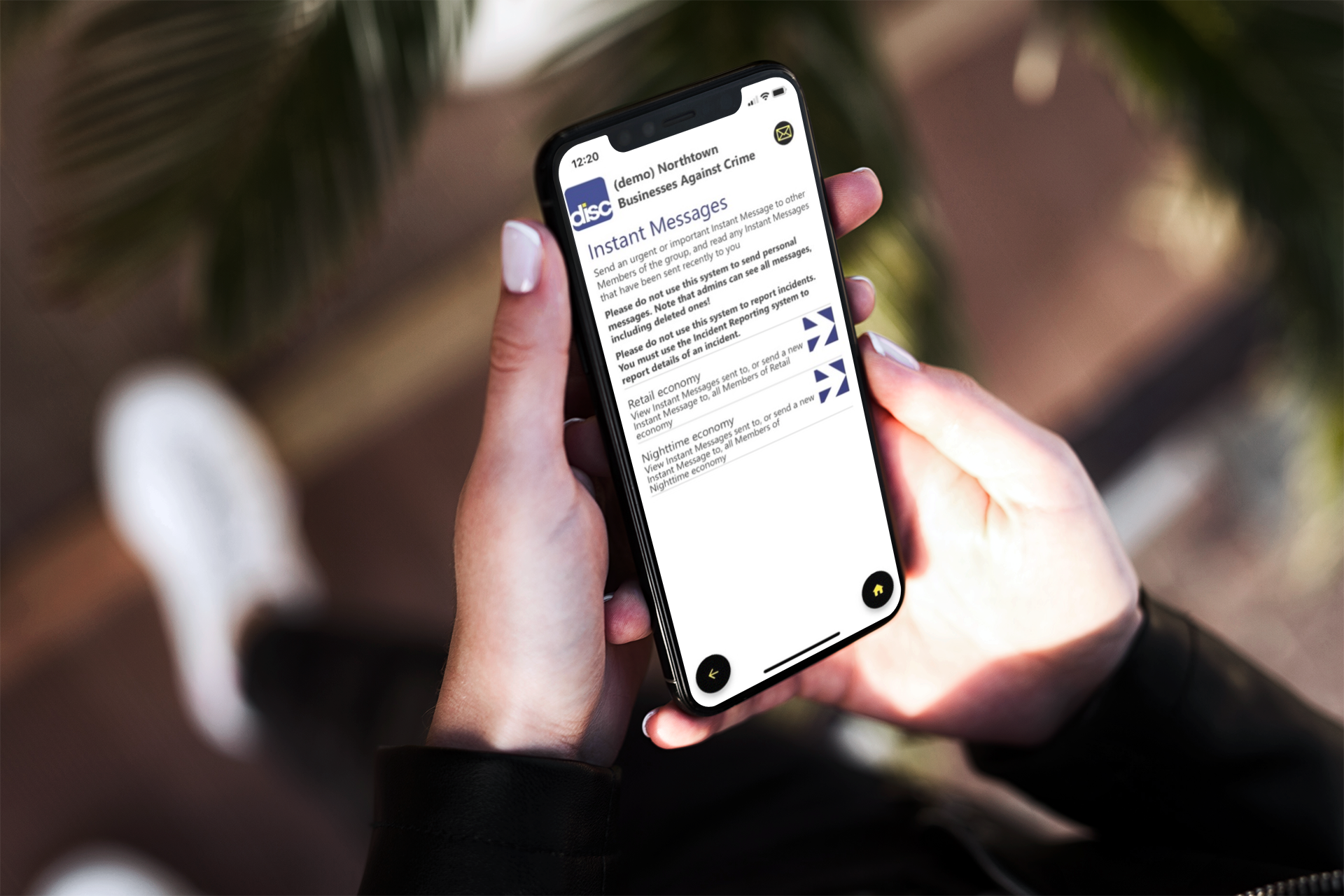
We are very excited to announce the launch of our new Instant Messenger feature, which will be released on Tuesday 2nd April 2024 with a new Disc version of 4.0.0. This will be available for Members to update from the Apple App Store for IPhone and the Google PlayStore for Android phones.

The new Instant Messenger will deliver a more streamlined experience, enabling Users to share important crime information quickly, easily and securely with each other. It will enable Disc Users to send text messages and images, as well as videos and voice messages to all other Members within their Member Category. All data is securely retained within the app, to ensure that there is no ‘bleed’.

This new feature of Disc now offers a very viable alternative to using popular Social Media apps for information-sharing and is totally free to all Disc customers. We encourage all of our Users to engage with this new Disc app feature.

Streamlined, effective, app-based crime information-sharing

The new feature will show all the ‘threads’ a User belongs to. From a thread screen, a member may:

  • See a list of (registered) Members who belong to the thread, by tapping the ‘people’ icon at the top right
  • View messages created by other Members
  • ‘Reply’ to another Member’s message, by long-tapping it and selecting Reply (replies are visible to every Member of the thread)
  • Create their own text, image, voice recording, and / or video messages (depending on the allowed upload types configured on your system)
  • Delete their own messages
  • Forward a message they have created to another thread they belong to, by long tapping the message and selecting Forward

Though a member may delete a message from the thread, and it will no longer be visible to Members, it will still be retained and accessible for a set period by Administrators.

Please note if a post is with regards to an incident, the new IM feature does not replace Incident Reporting and submitting a Disc Incident. Where appropriate, submitting an incident as a Direct Crime to Police, is still essential.

For more information or a demo please get in touch!

Addressing Anti-Social Behaviour on UK High Streets with Disc

Addressing Anti-Social Behaviour on UK High Streets with Disc

UK high streets are facing a challenge that demands our attention: anti-social behaviour (ASB). This issue affects areas from tranquil villages to bustling city centres, impacting businesses, disturbing local residents, and undermining community cohesion. In response to these concerns, Disc has become a vital tool in leading communities towards recovery and stability.

There has been a noticeable rise in ASB incidents across the UK – we can see the increase in our own stats at Disc. ASB incidents include things such as personal conflicts, public disturbances, and environmental harm such as vandalism. These incidents place an extra burden on businesses and community safety, resulting in a complex array of issues that generate fear, threaten personal security, and lead to economic losses due to property damage and the need for increased security measures.

Local business communities are navigating these challenges amidst an atmosphere of economic uncertainty, experiencing a decrease in consumer footfall and increased operational expenses. Additionally, the migration of ASB into public spaces calls for comprehensive strategies to safeguard both daytime business activities and the evening economy.

Disc: A Proactive Solution for ASB Management

Disc, a cloud-based crime information-sharing platform, represents a proactive approach to the management of low-level crime and ASB. It acts as a unifying platform, empowering businesses to operate autonomously yet share critical data in a manner that is efficient, effective, and compliant with GDPR standards.

The system enhances collaboration with police forces, allowing the community to handle minor disturbances internally while supporting police to identify prolific and repeat offenders. This ensures that police efforts are maximised where they have the most substantial deterrent effect on serious crimes.

The Impact of Effective Information Sharing

Disc transforms the landscape of information sharing among local businesses. It supports independent initiatives like Shopwatches and Pubwatches, enabling seamless communication of essential information across the community. This ensures that all sectors are informed and coordinated in their approach to ASB and working in Partnership with Police and Local Council.

With Disc’s Alert feature, emerging threats and repeat offenders can be swiftly identified and addressed. The system aids the police by streamlining evidence collection for Community Behaviour Orders (CBOs) and assists in identifying suspects. It prioritises police attention on high-risk individuals and repeat offenders, enhancing overall community safety.

Forging Secure High Streets for the Future

In an era where ASB poses significant challenges, platforms like Disc and the Crime Reduction Schemes using them, are invaluable in fortifying our local business communities. By optimising information-sharing, promoting collaborative efforts, and ensuring adherence to data protection laws, Disc is instrumental in advancing the security of our high streets. It’s bringing business owners, Business Improvement Districts, Crime Reduction Schemes, police forces and councils together for maximum effect.

As we contend with ASB, the integration of technology like Disc is critical in preserving the vitality of our urban centres. It is through such initiatives that we can ensure our high streets not only survive, but flourish, providing a secure and vibrant environment for businesses, workers and residents alike.