Crime Reduction Schemes – filling the policing gap

Crime Reduction Schemes – filling the policing gap
Napoleon once famously described Britain as a ‘Nation of Shopkeepers’. Our retail industry is currently facing unprecedented pressures, especially on the High Street. This is irrespective of being a large retail brand or a small independent – the challenges are very real.

The British Retail Consortium 2020 Retail crime survey estimates that over £1bn has been lost to retail crime and this has driven record spending on crime prevention of £1.2bn. This represents a staggering total cost of crime to retailers of £2.2bn. Customer theft constitutes the vast majority of losses to crime, now at £770m and 70% of the research respondents ranked the police response as ‘Poor’ or ‘Very Poor’.

This is not the fault of the police whose government funding has been cut leaving them stretched and even more so since Covid-19 struck – they have a lot more to do with less staff and less money. Everything in policing is filtered through threat, risk and harm and the majority of what police do can dominate traditional police response to retail crime. This leaves local businesses lacking in support and protection from shoplifting, anti-social behaviour (ASB) and other retail-related crimes and thus gives rise to the increasing need for Business Crime Reduction Partnerships which bring local business owners and national retailers together, to jointly self-manage local retail crime. 

The Met Police says “by joining or forming a business partnership, you’ll be helping to reduce crime and disorder affecting your business and others.”

Crime and the worry of criminal activity can impact on the profitability of local businesses. Joining a Business Crime Reduction Scheme helps business owners to reduce shoplifting and ASB as well as theft from their customers. The added benefit is that it empowers businesses, their employees and their partners, helping to educate, inform, share pertinent offender information, and instil greater peace of mind for all. 


The importance of taking action to combat prolific offenders

Retail crime is NOT a victimless crime.  Theft affects profit margins, which affects prices, which affects jobs and affects communities. 

This is not the time to do nothing – this is precisely the time to consider how to prevent, disrupt and deter shoplifters, especially prolific offenders.

There are numerous research papers on retail crime, all pointing to the fact that the vast majority of shoplifting is committed by 10% of prolific, local and most certainly life-style addicted offenders. Shoplifting is often viewed by prolific offenders as easy, offering big rewards for minimal consequences if caught.

The most important aspect of any Crime Reduction Scheme, especially if it also includes an exclusion or banning scheme, is that it allows the police to tap into lots of information and intelligence around local prolific offenders and concentrate on curbing their activity. With limited resources, it’s vital that police spend their time and funds in the areas where they can have most impact. Crime Reduction Schemes, working on behalf of their business members, can self-police the majority of illegal activity committed by low priority or first-time offenders, leaving the police to focus where they are needed most.

Research (you can read it here) shows that issuing a warning to ‘first time’ offenders reduces re-offending by up to around 80%; therefore, four out of five offenders do not subsequently re-offend.  The same research shows that where first-time offenders do re-offend, they are less likely to do so in premises where they had originally been reported. And, of those reported a second time – and banned – almost half are not reported for a further qualifying incident. 

Schemes like these clearly have a major impact on reducing low-level crime and ASB for first-time offenders, but also in helping to identify and stop the 10% of individuals who, typically, are responsible for 90% of retail crime. They can help identify these prolific offenders, gather evidence and help local police and community safety agencies to secure Community Behaviour Orders or other legal restraints.


Crime reduction schemes are the cement connecting police forces with local businesses

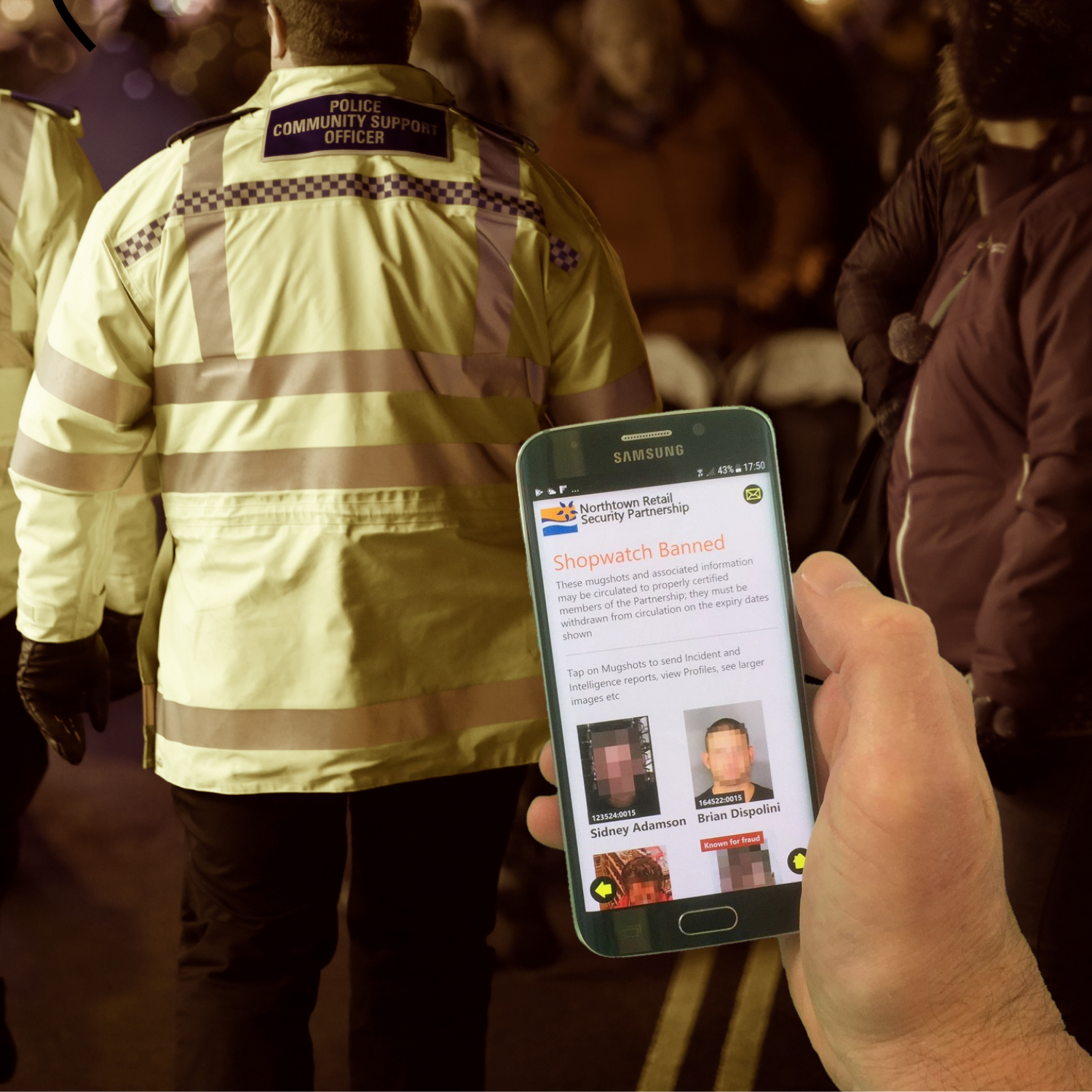
All of this can only occur if businesses work with and actively support local crime reduction schemes, along with the local police force. Police need to embrace technology and work closely with such schemes by, for example, having an effective and appropriate Information-sharing agreement that allows the sharing of police images among scheme members.

This is where the Disc system comes in. 

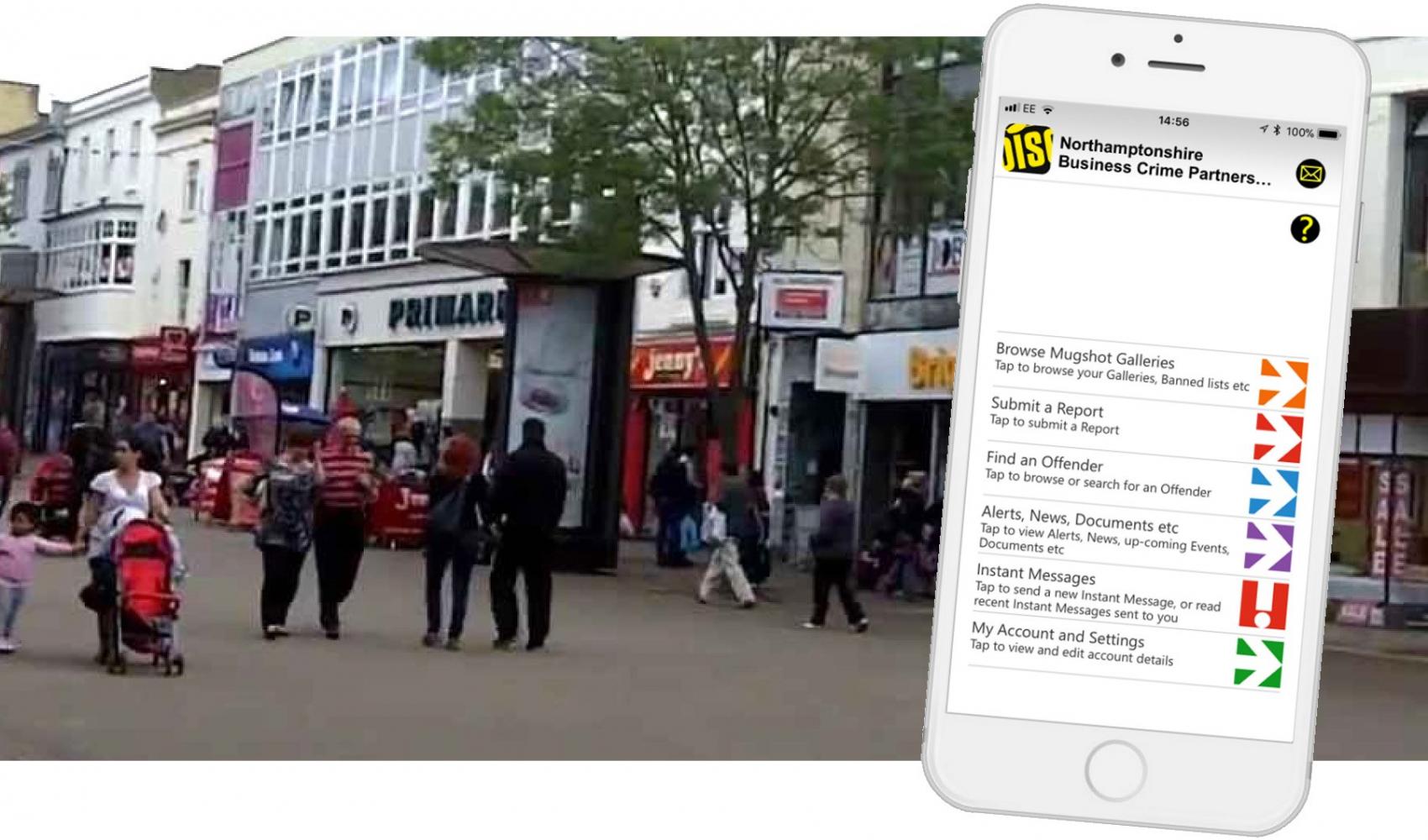
Disc is a unique online crime information-sharing system that’s helping drive down low-level crime and ASB across the UK. It empowers local business communities to ‘self-manage’ low-level crime and ASB, and enables police to work with them to deliver a new kind of effective, joined-up community policing.

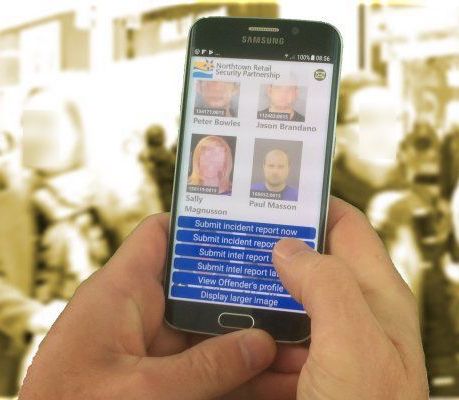
Disc allows Crime Reduction Schemes, Business Improvement Districts, Shopwatch and Pubwatch programmes and Neighbourhood Watch Schemes to effectively and compliantly collate and share information and intelligence around crime, ASB and safeguarding, through the Disc App and Desktop. It can be used by police forces to engage with local schemes and to join up all local Disc systems to provide really effective and efficient two-way communication with their local business community. 

With Disc, police forces are delivering more effective, joined-up community policing, and delivering more support, more efficiently and securely than ever before.

By all working together for a common aim, Crime Reduction Partnerships and Schemes effectively help businesses protect their customers, staff, stock and profit margins. With Disc, police do not need to get involved in every single retail crime or ASB incident, but can concentrate their efforts on stopping the small minority of ‘life-style’ addicted prolific offenders, using the information and intelligence gathered by businesses and saved to their local Disc system. Disc is the cement between police and local business communities, helping to fill the policing gap in dealing with low-level retail crime.


Find out more

Find out more about how Disc can help support your Crime Reduction Partnership Scheme or how Disc can support police forces.

If you would like a demonstration of the Disc system we would be delighted to provide one via video. Please get in touch to book in!


 

New Disc customers and ‘SC’ upgrades in September

New Disc customers and ‘SC’ upgrades in September

We’re delighted to announce a wide range of new Disc customers this month, as well as more upgrades to our new ‘Disc SC’ system.

New customers include a brand-new independent business crime reduction scheme in Humberside, a fast-growing security services provider, a new county-wide crime reduction scheme for Sussex and a new Disc SC system to cover two BIDs in Derby city. Existing customers who have decided to upgrade their existing Disc implementations to Disc SC this month include Northamptonshire Business Crime Partnership, Derbyshire Business Crime Reduction Partnership and Southampton and Norwich BIDs.

Grimsby Retailers In Partnership – GRIP – is a brand new independent business crime reduction scheme set up with active support of Humberside Police, working closely with Freshney Place Shopping Centre.  GRIP has chosen Disc as its secure crime information sharing system.  It joins Hull BID as the second Disc system in the Humberside Police area.

Amberstone Security is one of the country’s fastest-growing security providers – and has selected Disc to share crime and offender information between its own staff as well as with its customers including some of the largest retailers in the UK.  Disc is already used for current awareness management by the National Business Crime Solution so Amberstone will not only be able to share data about relevant offenders with its customers but also seamlessly pass to them any relevant alerts and news items from NBCS.

The new county-wide Sussex Partnerships Against Crime group (SuPAC) which has been set up to extend access to business crime reduction schemes across those areas of the county not already supported by town- and city-centre schemes, has adopted Disc ‘SC’.  The system will enable SuPAC to create multiple self-contained local ‘shopwatch’-type schemes in smaller towns and across rural areas in the county.  SuPAC becomes the 13th Disc system in Sussex, all of which can ‘cross-Disc’ publish news and alerts and also set up reciprocal links to help identify locally travelling Offenders.

The East Midlands Chamber of Commerce has used Disc to run its Chesterfield Shopwatch scheme since 2013. Two years ago the Chamber, Derbyshire police and local authorities combined to expand the scheme beyond Chesterfield to cover the entire county. This month East Midlands Chamber confirmed they will be upgrading their Chesterfield Disc system to Disc SC to support multiple schemes across the county. Derbyshire BCRP will also implement a new Disc system specifically to cover the Cathedral Quarter BID and the St Peters Quarter BID, both in Derby city-centre.

The new Disc ‘SC’ function (for ‘segregated content’) continues to win converts with more existing customers adopting the system – you can read about Disc SC here. Latest include Northamptonshire Business Crime Partnership (combining two separate Disc systems and implementing fully segregated schemes across the county); Southampton BID (using Disc SC to support not only its existing retail scheme but a new night-time scheme); and Norwich BID (combining its two existing separate Disc systems into their new single Disc SC implementation).

Find out more about how Disc is being used by other organisations here.

Why, for BIDs, ‘bouncing back’ is simply not enough

Why, for BIDs, ‘bouncing back’ is simply not enough

Covid presents two challenges to Business Improvement Districts.  One is to deliver practical assistance to levy-payers to maximise their ‘bounce back’ from lockdown. The other, put brutally, is to protect them from insolvency.

Covid is an existential threat for retailers and licensed premises. BIDs that simply do what they have always done – but perhaps more so – won’t be doing enough to protect their levy-payers from catastrophe and, ultimately, to protect themselves either.

Covid is accelerating major long-term trends (out of town retailing, multiple-isation, online retailing to name a few) which have been slowly impacting the UK’s high streets for many years.  Already, within just a few months of Covid coming to town, we have seen many retail and hospitality sector casualties.  There will be many more, large and small, in the months ahead.

If it’s tough for retailers, the night-time economy has been hit even harder. The previously resilient hospitality sector is only now seeing restaurants pubs and attractions re-opening; theatres and cinemas will be slower to revive, and clubs remain closed at the time of writing.  ‘Revival’ is perhaps too optimistic word: obligatory social distancing and some customers’ reticence to return to crowded places means businesses like these will be looking more to survive than to revive in the months – perhaps even years – ahead.

BIDs that continue to focus primarily on ‘place marketing’ –maximise visitor numbers and footfall in their areas – will need to do much, much more than that.  Their new emphasis must be on initiatives that deliver real, demonstrable cost-reductions for their levy-payers.  If they don’t then it won’t only be many of their levy-payers that go to the wall in the next few years – so too will many BIDs.

First and foremost, among such initiatives are daytime and night-time exclusion schemes.

Research from the University of Gloucestershire shows that local exclusion schemes deliver demonstrable reductions in low-level crime and ASB for their participants. In practice, that means reducing shoplifting for local retailers and keeping troublemakers out of pubs, bars and clubs.

Reducing shoplifting and bringing more people into town at night means protecting levy-payers’ profitability – and enhancing the BID’s own prospects when it comes time to re-ballot.

Of the 350 BIDs in the UK, 250 cover towns or city-centres, where retailers and the hospitality industry constitute the largest proportion of levy-payers.  Yet a third of these don’t include a ‘safer secure’ commitment in their Business Plans.  Of those that do, too few offer more than on-street ‘Welcome’ teams, regular meetings with local police and advice on CCTV camera placing.  And of these, only one in three manage exclusion schemes on behalf of their retailers and hospitality sectors.

Now must be the time when BIDs put exclusion schemes right to the top of their priorities.  And happily, it has never been easier – and quicker – to set up and manage efficient, effective and compliant schemes.

The Coronavirus Act 2020 allows BIDs previously due to re-ballot in the period to March 2021 to extend their terms for a further 12 months.  And the government has made an ex gratia grant of £6.1m specifically to help BIDs through this challenging period.  Taken together, these initiatives provide more than enough breathing space, and funding, for every town and city-centre BID to get on with it.

If you’re a BID that wants to explore the benefits and the practicalities of setting up retail and night-time banning schemes for your levy-payers, find out more and contact us now.

Priti Patel: “shopworkers need protection” – local, grass roots ‘active crime reduction’ is the only way

Priti Patel: “shopworkers need protection” – local, grass roots ‘active crime reduction’ is the only way

Forget about our streets:  it’s inside our corner-shops and take-aways that criminals are running riot.

In July Priti Patel commanded a crack-down on abuse and violence in the retail sector.  But there’s a crucial gap in her chain of command – a gap that only local retailers themselves can fill.

Talk about Best Practice Guides, exhortations to report more crimes, ‘strengthening and making full use of’ existing laws, improving data-sharing between businesses and urging police to ‘underscore the importance’ of close working with local businesses – it’s all been said, and even done, before.

Saying things, and even doing things, doesn’t always produce the desired results. Converting this kind of top-down rhetoric into effective action means motivating and mobilising real-life retailers and licensees to participate in active crime-reduction.

You’d have thought that was a no-brainer: after all these are the people who stand to benefit most. And you’d have thought that Priti Patel, born and bred into independent retailing, would ‘get it’ better than most.

But there are many problems in converting good words and actions into good results. Just because Westminster commands it, doesn’t mean that 43 territorial police forces will obey and anytime soon.  Even if police show willing, it’s unlikely they’ll make ‘full use of existing laws’ to address the problem: high volume, low-value offences rank very low in their priorities – and probably rightly so. Spending between £5,000 and £10,000 of scarce policing and (even scarcer) criminal justice resources on progressing a shoplifting offence, or even low level ‘violence’ in retail premises, to a successful conclusion in the criminal courts, is, frankly, a criminal waste of money.


Enabling retailers to self manage low-level crime to fill the ‘policing gap’

There is an answer. Local retailers and licensees, working together in Business Crime Reduction Partnerships (BCRPs) or Business Improvement Districts (BIDs) is the way forward. By enabling them to self-manage low-level crime in their own premises and local communities, they can – and do – play an essential role in ‘filling the policing gap’.

More and more police forces around the country are working with such partnerships and schemes. It’s a win-win-win deal:

  • the local businesses achieve real (and provable) reductions in shoplifting and violent ASB
  • police fulfil their duty to prevent and detect crime by supporting them (at virtually zero cost)
  • the wider community benefits by identifying early-stage offenders and nudging them back onto the straight and narrow.


The British Retail Consortium, representing the interests of the largest retailers in the UK, has long called for ‘the need for an improved police response’. This is still sadly lacking.  If they, and the home secretary, are serious about reducing retail crime they need to spend more time with local BCRPs and BIDs that operate exclusion or banning schemes.  They’ll see that it is here, at grassroots, where the action is, and where good things happen. And for a lot less investment.

Only by harnessing the motivation – and self-interest – of smaller owner/manager retail businesses, through schemes like these, will Westminster, police and major retailers really close the policing gap.  It’s time for Priti Patel to educate her government on the need for grassroots engagement to get real results in low-level crime reduction.

Find out more about how Disc helps BID’s and Watch Groups reduce low-level retail crime.


Steve Lang joins the Disc team

Steve Lang joins the Disc team

We’re delighted to announce that Steve Lang has joined the Littoralis team to further extend Disc implementations across the UK.

Even with its existing customer base of 200+ implementations covering over 500 towns and city-centres across the country, we believe Disc has much further to go – and Steve will play a key role in helping us get there.

After 30 years in the police – in the Met and later in Northants – Steve took over management of the then-struggling Northampton Business Crime Reduction Partnership in 2015.  He quickly put it onto a sound financial footing, and then applied the same model to create a network of five other BCRPs covering the entire county.  Today Northamptonshire Business Crime Partnership is one of the UK’s most highly regarded county-wide partnerships.

“Steve knows Disc well” says Littoralis’ Charlie Newman “and we know him pretty well too. So we were absolutely delighted when he answered our advertisement for someone to join us.

“His police background is invaluable – and his business skills have impressed us too.  He’s got enormous experience of course, but he’s flexible, he’s a listener, and he responds to customers’ needs. And he knows about business. He’ll fit in very well.

“This is an exciting time for Disc.  As our business has grown we now have the resources to attract people like Steve, to help us build our business further.  There’s a lot to do, and we’re delighted that Steve has chosen to do it with us!”

Contact Steve at steve.lang@littoralis.com.

Reducing crime in Sheffield by protecting ‘vulnerable’ Offenders

Reducing crime in Sheffield by protecting ‘vulnerable’ Offenders

Around the country, Business Crime Reduction Partnerships help to reduce low-level business crime and anti-social behaviour.  Now, some are working to identify ‘vulnerable’ Offenders as early as possible to reduce future crime…

Sheffield City Council’s Business Crime Team is based in its city-centre CCTV control room.  From there it runs the Sheffield Business Crime Partnership, bringing together local retailers and licensees with police and council agencies to help drive down low-level crime and ASB .

The Partnership uses Disc to exchange information about local Offenders – contributed by Sheffield’s CCTV network, local businesses and police – among its Members.   It also provides them with access to its city-centre radio system.

Rob Cowley is one of the Team’s City Centre Ambassadors. Being in the CCTV control room gives him unique visibility of what’s happening on the city’s streets and provides images of Offenders.  He uses Disc to manage these Offenders, record incidents which might not merit police attention, and share images and names of convicted Offenders (provided through an Information Sharing Agreement with South Yorkshire Police) who represent a threat to Members’ premises, property, staff or customers.


Effective local information-sharing between communities and police is vital

An important part of Rob’s job is to maintain close contact with local businesses on the one hand and, on the other, with relevant public agencies:  the police, council and various charitable organisations.  His team also works closely with Sheffield City Business Improvement District which supports the Partnership by part-subsidising its radio system and its subscription to the National Business Crime Solution.

The police RCU comprises one dedicated officer – Tony Nicholls – and two volunteers who take statements and collect CCTV footage from retailers.  Tony carries BCT’s radios, has direct access to Rob’s Disc system, attends Partnership meetings with local businesses, and shares information with the team under a formal Information Sharing Agreement.

“The Business Crime Team sits between the business community and the police” says Rob, “ensuring that communication keeps flowing between retailers and ourselves, and between ourselves and the police Retail Crime Unit. With our CCTV, together with Disc, we generate a lot of local intel, and make this available to the police.”

Gathering intel about local prolific Offenders to enable police to apply for, and secure, Criminal Behaviour Orders (CBO) is a case in point.

“Our businesses provide reports on activities of known Offenders and the police can take this intel to court to use as evidence in applying for Criminal Behaviour Orders, for example. After a successful application, we can use Disc to share that information back to the retailers – enabling them, in turn, to use Disc to report any breaches of the CBO – but also to demonstrate to them that reporting prolific Offenders through Disc really does protect their businesses”.


Helping to rehabilitate: keeping vulnerable Offenders out of the justice system

For Rob, gathering information about Offenders and submitting it as evidence to support the imposition of suitable criminal sanctions is only a part of the job.

Rob explains: “Maybe even more important is gathering intel so we can identify early-stage or previously unknown ‘vulnerable’ Offenders and use it to help them off what might turn out to be the first rungs of a step-ladder into a criminal career. Very often it is in the retail environment that early-stage Offenders first appear – for shop-lifting for example.  Maximum engagement with our businesses is essential to generate a sufficient flow of intelligence to these partners to enable them to initiate appropriate interventions”.

Rob and his team meet monthly with the police, the city’s Drug & Alcohol Team and other Community Safety teams, the local probation service and homeless charities, to help identify young or otherwise vulnerable people involved in low-level crime and anti-social behaviour – not to direct them into the criminal justice systems but to keep them out of it.

“We discuss where the information should go, and whether we should be looking to escalate specific incidents to the police for legal enforcement, or whether non-judicial intervention is more appropriate.

“Criminal enforcement may not always be the best option, perhaps where the Offender is young, or otherwise vulnerable. Where this is the case, we can provide information – through Disc or our CCTV footage – to help our partners consider alternative strategies.  Appropriate intervention at this point can help divert the Offender away from crime, and obviously that’s a win-win for everyone”.

Dealing with ‘vulnerable Offenders’ can be a pretty sensitive business and sharing their identities with the businesses that comprise the Sheffield Crime Reduction Partnership may not be appropriate.  “In this part of our work we work within Sheffield City’s Vulnerable Young Person Multi-Agency group to provide intelligence which it may not be appropriate for our retailers or licensees to know.

“Knowing that a young person is shoplifting is important of course, but it’s not just CCTV footage or images that matter.  With vulnerable Offenders the offence itself may tell us little. It may be more important to identify any pattern in their offending.  Or to know what they are stealing – is it likely to be for their own use, or for someone else’s?  Are they working alone?  Are they regularly associating with other, perhaps older individuals?

“This is all information that helps ensure that intervention is appropriate.  Without our input sometimes it’s hard to know.”


Adopting Disc SC: sharing different types of personal information with different types of Users

Sheffield Business Crime Team was among the first to adopt ‘Disc SC’ (Segregated Content) – a variant of the Disc information-sharing system which enables different types of information to be shared only with specific types of recipients.

“We’re using Disc SC not only to share data about convicted Offenders with our city-centre businesses so they can keep an eye on them when they’re in and around their premises, or report them when they’re in breach of a CBP.  We’re now also able to share data about, for example, suspected vulnerable Offenders with only those public agencies that have a specific lawful remit, such as the police, of course, but also Community Safety teams and other members of the Vulnerable Young Person Multi-Agency Group.

“We are also creating a separate group specifically to cover the hospitality sector in the city centre, including hotels.  Here the types of Offenders may differ from those in shops and licensed premises, and incidents may differ too, for example involving child sexual abuse.  Here the identities of Offenders and victims alike need to be restricted to only those with an appropriate legal remit.  Disc SC enables us to do this, at the same time as enabling us to share other Offender data with other sections of our membership.”

Find out more about Disc SC here.


New Disc implementations during lockdown…

New Disc implementations during lockdown…

Even during ‘lockdown’ we’ve been delighted to welcome two new customers to Disc, as well as help a number of existing customers to upgrade to our new Disc SC system.

Bournemouth Coastal BID decided to adopt Disc after a lockdown ‘Zoom’ session at the end of May.

“One positive that has come out of the lockdown” says Littoralis’ Charlie Newman “is that business has started to be conducted virtually  – I’m sure more and more will be conducted this way in the future”.

Bournemouth Coastal BID is one of just six ‘tourism’ BIDs in the UK, covering a large section of the Dorset coast, and a wide range of levy-payers including retailers, licensees, restaurants, hotels and guesthouses, attractions, and seafront traders as well as offices and other commercial properties. Not surprisingly with such a diverse profile, the BID opted to implement our new Disc SC variant.

Disc SC has already been well received by existing Disc customers.  Sheffield Business Crime Partnership, and Bristol Broadmead and Bristol City Centre BIDs have upgraded their existing Disc systems to Disc SC, and Maidsafe Business Crime Reduction Partnership covering the Maidstone area of Kent, working with OneMaidstone BID in Kent, have also chosen Disc SC.

Welcome too, to another new Disc implementation: Oakengates Shopwatch near Telford in Shropshire.  The system will be running alongside, and linked with,  three established Disc systems in the area covering Telford Shopwatch, Telford Pubwatch and Wellington Shopwatch.


Introducing Disc SC: manage any number of schemes from just one Disc implementation

Introducing Disc SC:  manage any number of schemes from just one Disc implementation

We’re delighted to announce the launch of Disc SC – available as an optional upgrade for new and existing customers.

‘SC’ stands for segregated content: Disc SC enables a Disc Administrator to restrict access to specific types of content to designated Users within a single Disc system.  So, while maintaining just one database of Users and content, a single Disc system can support multiple ‘schemes’, each sharing information with different audiences.


So how can Disc SC be used?

A Disc system that supports just one scheme – a Shopwatch scheme for retailers for example – can now deploy and support a different scheme for the ‘nighttime economy’.  Or the Administrator can develop schemes specifically for hotels, B&Bs and guesthouses, betting shops, or transport providers. With Disc SC that’s not just possible – it’s easy.

Another example: a local crime reduction partnership wants to launch a new partnership in a different area.  That’s easy too, indeed a single Disc SC system can support any number of shopwatches and/or pubwatches, ‘rural watches’, even neighbourhood watches, right across a county or police force area.

Around the UK, over 100 Business Improvement Districts (BIDs) already know about Disc’s effective communications platform combining an easy-to-use content management system with a set of powerful publishing tools including the Disc Desktop and App, its built-in 100% automated weekly eNewsletter system and compliant Instant Messenger.  Together these deliver high levels of participation by levy-payers.  Now, with Disc SC, the same powerful system can be used to deliver news, alerts, access to documents and information about up-coming events to all levy-payers – not just those with a ‘legitimate interest’ in accessing personal data of offenders.


If you currently use a single Disc system

If your Disc system answers your current needs, stick with it. Disc SC is only appropriate for customers who want to expand Disc into new audiences or areas, and offers no additional functionality.

However, if you can see benefits in developing one or more new schemes, contact us.  We can upgrade your existing system to Disc SC within two working days, after which you’ll have access to full ‘How to…’ documentation so you can quickly deploy your new schemes. Your existing Users will notice no changes to their service.


If you currently have two or more Disc systems

Many Disc customers run two Disc systems, each supporting different schemes.  If you have no plans to develop new schemes, we advise continuing that way.

However, if you want to use Disc to establish one or more further schemes, or if you’re already running three or more Disc systems, then transitioning to Disc SC will save you money – as well as enable you to deploy and support any number of further schemes at any time. We’ll implement Disc SC on one of your existing Disc systems and then migrate data from your other Disc system(s) into it.  We’ll work with you to ensure a totally smooth transition. (If you wish to combine multiple Disc systems into your new Disc SC system we may need to make a modest charge for data migration).


If you’d like to know more about Disc SC contact us now to arrange a consultation.

Pubwatch schemes: here yesterday, gone tomorrow?

Pubwatch schemes:  here yesterday, gone tomorrow?

Right now, barely 10% of licenced premises are open.  No one knows when Britain’s leisure industry will be back to work – but there’s no doubt it won’t ever be quite the same.

Even before Coronavirus, a pub was closing every 12 hours across the UK.  So adapting to the ‘new normal’ is only one challenge that faces publicans in the years ahead.

When lockdown is lifted many licensed premises will remain closed: much of the sector was financially under-resourced at the best of times and Coronavirus will have called last orders on many. Those that survive will look inevitably to reduce essential costs to the minimum, and identify and jettison non-essential ones altogether.

Where will this leave Pubwatch schemes? 

Many Pubwatch schemes are relatively informal groups of licensees who share information about local troublemakers and, where appropriate, exclude them from their premises. Few charge member subscriptions: hopefully their future will be relatively secure in the cash-strapped future.

Larger Pubwatches, however, tend to be supported by subscriptions, and these will undoubtedly be under pressure as members look to reduce non-essential overheads.  Many depend on a single member to manage the Pubwatch’s affairs:  maybe he or she will be among those that don’t resume trading when the lockdown is eventually lifted in full.  It isn’t always easy to find a replacement willing to step up in their place.  Too often Pubwatch schemes simply fade away when a key ‘mover and shaker’ decides to hand in their empties for good.

Yet Pubwatches provide an invaluable service, and not just to their members. Keeping troublemakers away benefits not only pubs but the wider communities in which they are located.  Police and licensing authorities work closely with Pubwatches not only so that pubs maintain good order but also that young offenders can be identified at an early stage.  Pubwatches provide invaluable opportunities to encourage youngsters to improve their behaviour and, where necessary, to refer them to council’s Early Intervention teams and ultimately, and only where unavoidable, to the police and the criminal justice system.

It’s sad to see pubs close their doors for good – but it’s nothing short of tragic to see Pubwatches closing wholesale around the country. Yet, for as long as Pubwatch schemes are under-resourced, reliant on a single ‘mover and shaker’ member to keep them going, and for receive no direct support from police and councils, that’s what we can expect.

Some police forces and local authorities already provide invaluable support for Pubwatches in their areas –  but most don’t.  True – many Pubwatches are keen to maintain their independence from local policing and licencing authorities. But with Pubwatches under pressure nationwide, police and councils everywhere should explore what they can do to provide support for these groups.

For example, even for the most independently-minded Pubwatch, police and councils can provide access to online management tools like Disc, to make it easier for the Pubwatch to manage its own affairs without any undue reliance on a single ‘mover and shaker’. In doing so, police and councils can also ensure that the Pubwatch operates in compliance with legal obligations, not least of which is GDPR without which they’re understandably unwilling, for example, to share personal data of offenders.

The aim: a win-win deal for all.  The Pubwatch benefits from improved information-sharing, mobile access to galleries of locally banned troublemakers, and legally compliant instant messaging.  The police and council benefit from access to intel about low-level crime and Anti-Social Behaviour and the offenders behind it, as well as access to new ways of instantly and effectively communicating news, Alerts, documents and information about up-coming events etc to licensees across their policing area.

Find out more about Disc for Watch Groups.


Police & Crime Commissioners must support crime reduction schemes now – before it’s too late

Police & Crime Commissioners must support crime reduction schemes now – before it’s too late

Coronavirus has hit public-facing service industries the hardest: tourism, travel, retail and leisure sectors are facing the biggest challenges of all.

Government is doing what it can to keep these industries – and many of the business-to-business companies that support them – on life-support. But smaller – and some larger – Business Crime Reduction Partnerships are facing an existential crisis.

Where they can, BCRP Managers have put themselves on furlough, but government furlough support is set to be reduced.  In addition, with modest financial turnovers, few can borrow sufficient funds through ‘Bounce Back’ loans to keep operational.

Business Crime Reduction Partnerships deliver a crucial role in ‘filling the policing gap’ in communities across the country.  But, when the retail and the hospitality industries return to normal – whatever that turns out to be – many BCRPs will simply have disappeared for good.

The problem, says Andy Sharman (left) of South West Business Crime Centre (SWBCC), is the business model that too many BCRPs rely on.  “Even before Coronavirus, the model was flawed” he says. “These are relatively small organisations entirely dependent on subscriptions from local retailers and licensees, plus whatever they might get from hiring radios.  This modest revenue stream has been threatened by long-term decline in High Street retailing plus cost-cutting by some of the largest retailers. Now Coronavirus means they’re facing a perfect storm.”

According to SWBCC research conducted in the early stages of the Coronavirus shut-down, independent BCRPs are facing a fight for survival. Yet right around the country, high streets and the wider communities around them will continue to need active, and sustainable BCRPs.

The benefits BCRPs can generate are well-known –  and proven –  and Police & Crime Commissioners countrywide have signalled their support for exactly this kind of community-based partnership-working outside the public criminal justice system, recognising their key role in addressing and reducing the kind of low-level crime and ASB that police cannot economically address themselves.

Now, more than ever, is the time for PCCs to step up and provide the modest financial support for struggling BCRPs that can make the difference between their survival and their untimely demise.

“But not just to do more of the same” says Andy Sharman.  “PCCs must demand that recipients of funding demonstrate how they can return to full self-sustainability when the lock-down is finally ended – and that means BCRPs must generate more, and new, organic growth after lock-down. They need to look beyond dwindling subscriptions and radio rentals, to new financial opportunities.

“They need to sell their services more effectively, demonstrating the effectiveness of local exclusion schemes to new potential subscribers.  They need to make sure that message is heard more widely, right across a town, for example, not just in a central shopping area.  They need to recruit new members from new sectors such as public transport, industrial estates, hotels and so on.

“There are opportunities to widen their range of services too. Some have taken over troubled and under-resourced public CCTV systems, for example. My experience is that BCRPs are better at providing such services because they answer direct to local businesses, who obviously stand to benefit most.

“Warden and Ranger services are widely deployed by Business Improvement Districts; again, a BCRP is well-positioned to provide these kinds of services for the benefit of its members.  They provide a high-vis presence to deter low level crime, and they can really help to re-build relationships with police, and work out a way of working more closely together for their mutual benefit. Why not provide a key-holder service too?”

Sharman believes it’s ideas like these that a PCC will look for before providing financial assistance to BCRPs through the next few months or, who knows? even longer. Simply hoping to return to the ‘new normal’ with an old, and flawed, business model is unlikely to be good enough.